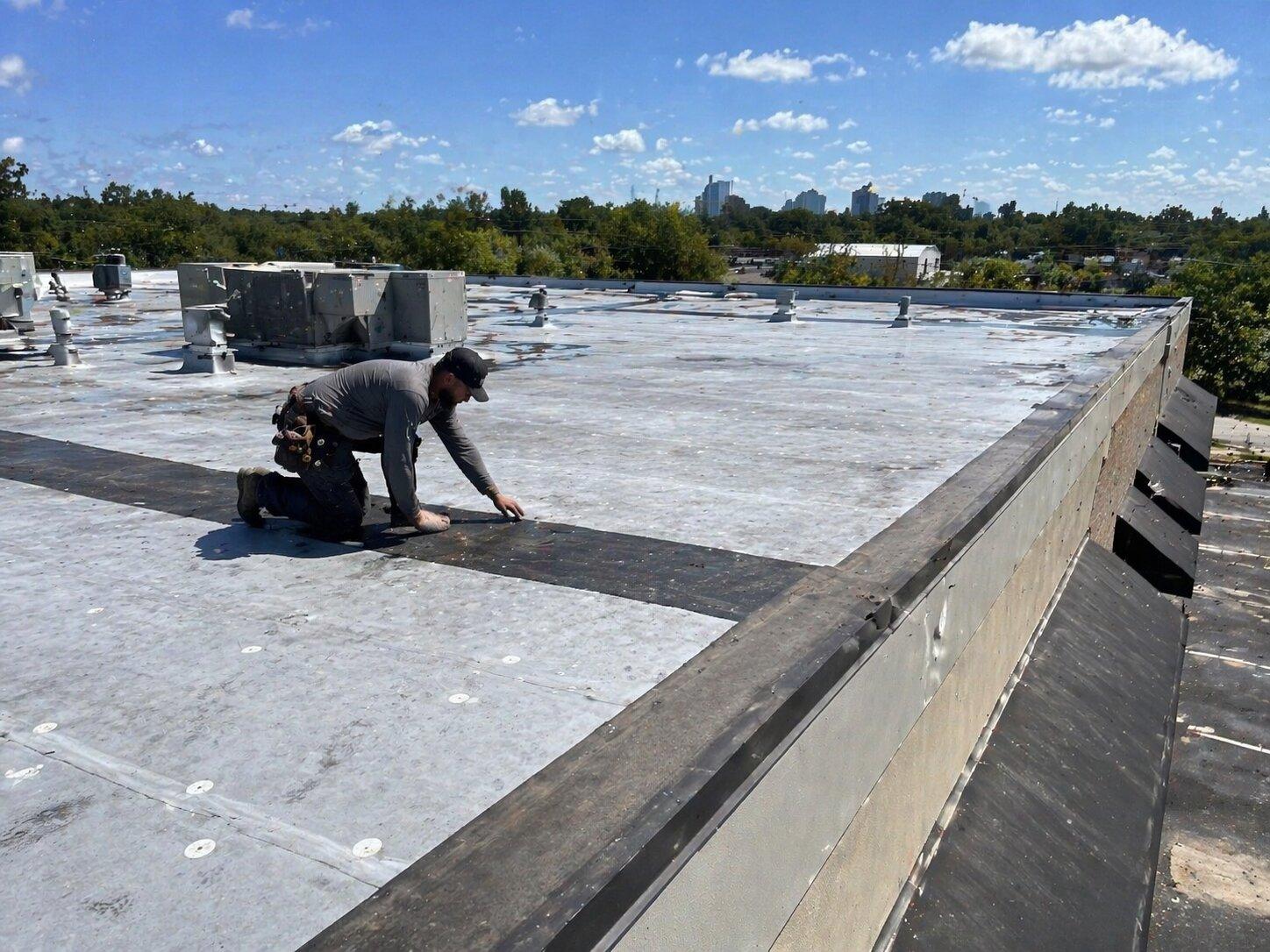
If you own or manage a commercial property, your roof is one of the most critical and most overlooked parts of the building. It protects everything inside, affects energy costs, and has a direct impact on your ability to operate without interruption.
Yet most property owners do not think about their commercial roof until something goes wrong.
This guide covers what commercial roofing actually is, how it differs from residential roofing, what systems are most commonly used in the Atlanta area, and what property owners should know before hiring a contractor or scheduling work.
What Is Commercial Roofing?
Commercial roofing refers to the roofing systems installed on non-residential or multi-unit buildings, including office buildings, retail centers, warehouses, industrial facilities, apartment complexes, HOA properties, and mixed-use developments.
The term covers a wide range of work: new installations, repairs, re-roofing, maintenance, and inspections. What distinguishes it from residential roofing is not just the size of the job but the materials, installation methods, building codes, and performance requirements involved.
Commercial roofs are typically flat or low-slope, which creates different drainage challenges and requires different waterproofing strategies than the pitched roofs found on most single-family homes.
How Commercial Roofing Differs from Residential Roofing
The differences between commercial and residential roofing go beyond scale. Understanding them helps property owners set realistic expectations and ask better questions when working with a contractor.
Roof slope and drainage
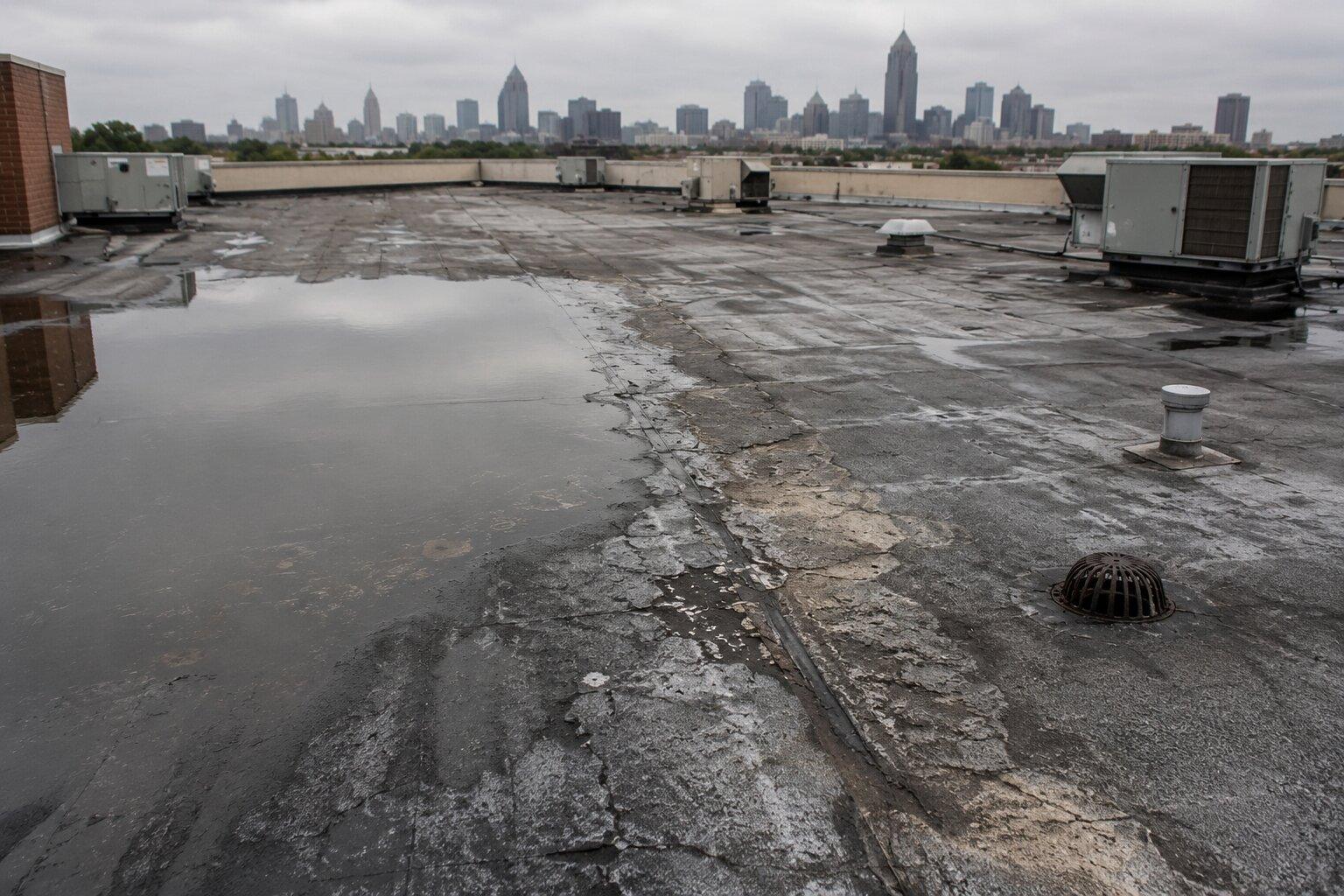
Most commercial buildings use flat or low-slope roof designs, which means water does not naturally shed the way it does on a pitched residential roof. Proper drainage design is critical. Without it, standing water accelerates membrane deterioration and increases leak risk significantly.
Material systems
Residential roofing is dominated by asphalt shingles. Commercial roofing uses membrane systems, modified bitumen, metal panels, built-up roofing, and other products specifically engineered for flat or low-slope applications.
Building codes and permitting
Commercial roofing projects are subject to commercial building codes, which differ from residential requirements. Permitted work, inspections, and code compliance are standard parts of the process for most commercial projects.
Project complexity
Commercial buildings often have rooftop HVAC units, exhaust vents, skylights, drainage systems, and other penetrations that must be properly flashed and sealed. Each one represents a potential entry point for water if not handled correctly.
Contractor qualifications
Not every roofing company has experience with commercial systems. The installation methods, tools, and technical knowledge required for commercial work are meaningfully different from what is needed on a residential project.
Common Commercial Roofing Systems
Property owners in Georgia will encounter several types of commercial roofing systems depending on the age of the building, its use, and the budget available for installation or replacement.
TPO (Thermoplastic Polyolefin)
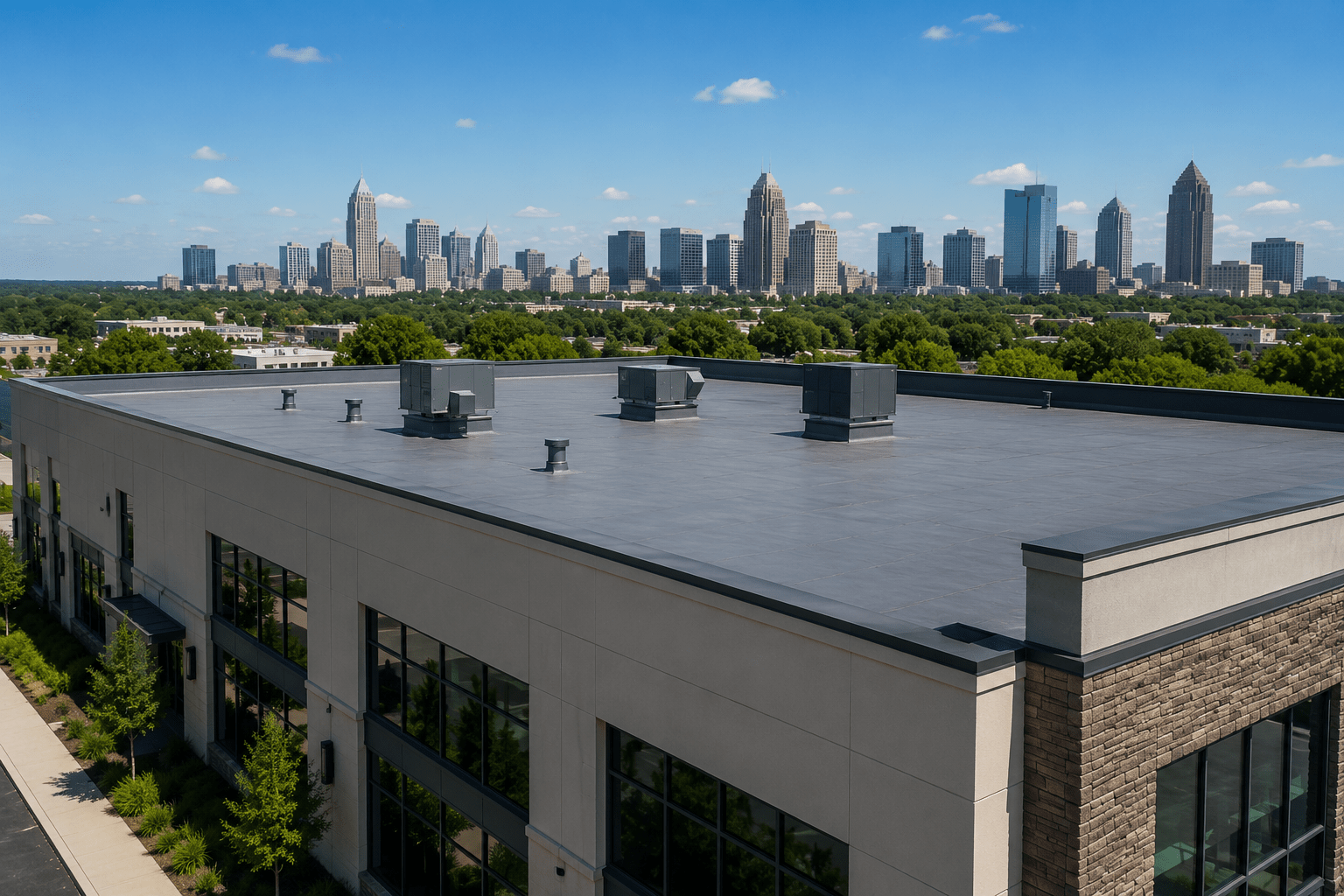
TPO is one of the most widely used commercial roofing membranes today. It is a single-ply white or light-colored membrane that reflects heat, which helps reduce cooling costs in Georgia’s warm climate. TPO is heat-welded at the seams, creating a strong, watertight bond. It is generally durable, cost-effective, and well-suited to flat and low-slope applications.
EPDM (Ethylene Propylene Diene Monomer)
EPDM is a rubber-based single-ply membrane that has been used in commercial roofing for decades. It is black, flexible, and resistant to UV exposure and weathering. EPDM is known for its longevity and is a common choice on flat roofs where thermal performance is less of a priority than durability.
Modified Bitumen
Modified bitumen is a multi-layer system that evolved from built-up roofing. It uses asphalt-based sheets reinforced with polyester or fiberglass and is typically applied in two or more layers. It performs well in extreme temperatures and is known for its puncture resistance. Modified bitumen systems are common on older commercial buildings and in re-roofing applications.
Built-Up Roofing (BUR)
Built-up roofing is one of the oldest commercial roofing systems still in use. It consists of alternating layers of bitumen and reinforcing fabrics topped with a layer of gravel or a reflective coating. BUR systems are durable and provide good waterproofing performance but are heavier and more labor-intensive to install than single-ply alternatives.
Metal Roofing
Standing seam and other metal roofing systems are increasingly used on commercial properties, particularly on buildings with higher roof slopes or where longevity and low maintenance are priorities. Metal roofs can last 40 years or more with proper care and are a strong long-term value when the upfront investment fits the budget.
Roof Coatings
Roof coatings are not a full roofing system on their own, but they are worth understanding. Silicone, acrylic, and other coatings can extend the life of an existing commercial roof by protecting the membrane from UV exposure, ponding water, and minor damage. When applied correctly to an appropriate substrate, they can add years of service life at a fraction of replacement cost.
How Long Does a Commercial Roof Last?
Lifespan varies significantly depending on the system, installation quality, maintenance history, and Georgia’s weather conditions.
As a general reference point, here is what property owners can typically expect:
TPO and EPDM membranes that are properly installed and maintained generally last between 20 and 30 years. Modified bitumen systems typically perform well for 15 to 25 years. Built-up roofing systems can last 20 years or longer with regular maintenance. Metal roofing systems, depending on the gauge and coating, often exceed 40 years of service life.
These numbers assume routine maintenance and timely repairs. A roof that is ignored after storm damage or allowed to develop unresolved drainage problems will deteriorate much faster.
Why Commercial Roof Maintenance Matters
Deferred maintenance is one of the most common reasons commercial roofs fail prematurely. Small issues left unaddressed become large ones, and what might have been a minor repair turns into a full replacement.
Regular maintenance on a commercial roof typically includes inspecting seams and flashings for separation or lifting, clearing drains and scuppers of debris, looking for membrane punctures or blistering, checking around rooftop equipment penetrations, and documenting any changes in roof condition over time.
The National Roofing Contractors Association recommends that commercial roofs be inspected at least twice per year, typically in the spring and fall, as well as after any significant weather event. Georgia’s storm season makes the post-storm inspection particularly important for Metro Atlanta property owners.
What to Expect from a Commercial Roofing Project
Whether you are having a roof replaced, repaired, or inspected, understanding the general process helps you plan appropriately and evaluate contractors more confidently.
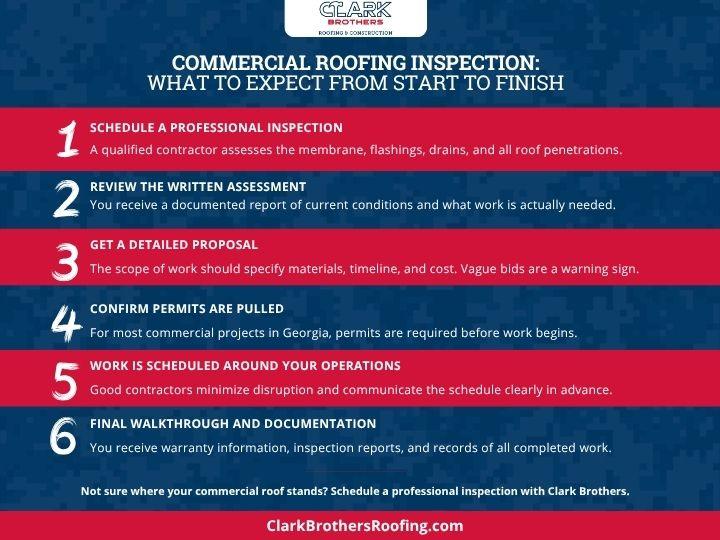
Inspection and assessment. A qualified commercial roofing contractor will begin with a thorough inspection of the existing system, including the membrane, flashings, drains, and any penetrations. The goal is to document current conditions and identify what work is actually needed, not just what could be sold.
Scope of work and proposal. Based on the inspection, the contractor should provide a written scope of work that clearly describes what will be done, what materials will be used, and what the project timeline looks like. Vague proposals are a warning sign.
Permitting. Depending on the scope of work, a permit may be required. A licensed commercial contractor should handle this on your behalf and pull the necessary permits before work begins.
Installation. Commercial roofing work is typically phased to minimize disruption to building operations. Good contractors communicate the schedule clearly and work with property managers to plan around occupancy and access needs.
Final walkthrough and documentation. At project completion, you should receive documentation of the work performed, warranty information, and any inspection reports. This documentation matters for insurance purposes, future sale of the property, and warranty claims.
What to Look for When Hiring a Commercial Roofing Contractor
The contractor you hire has more impact on the long-term performance of your roof than almost any other factor. Here is what to evaluate.
Commercial-specific experience. Ask specifically about commercial projects similar to yours. A contractor with strong residential credentials but limited commercial experience may not be the right fit.
Licensing and insurance. Georgia requires contractors to hold the appropriate license for commercial work. You can verify contractor licensing through the Georgia Secretary of State’s website. Ask for proof of general liability and workers’ compensation insurance before any work begins.
Written proposal with material specs. The bid should specify exactly what systems and materials will be used, not just a dollar amount. Different products carry different warranties and performance characteristics, and you should know what you are getting.
References from commercial clients. Ask for references from property owners or managers who have had similar work done. A contractor with a strong commercial track record should be able to provide them without hesitation.
Warranty clarity. Understand both the manufacturer’s warranty on the roofing system and the contractor’s workmanship warranty. Know what each covers and what voids them.
Commercial Roofing After Storm Damage in Georgia
Georgia’s climate puts commercial roofs under consistent pressure. High winds, hail, and heavy rain are regular occurrences, particularly in the spring and summer months, and the damage they cause is not always obvious.
After a significant storm, a professional inspection is the right first step. Commercial roof damage often involves lifted or torn membrane seams, displaced flashing around rooftop equipment, clogged or damaged drainage systems, and membrane punctures from wind-carried debris.
Identifying and documenting this damage quickly matters, both for protecting the building and for supporting any insurance claim that may be necessary. Delays in documentation or repairs can complicate the claims process and allow secondary damage to develop. For a deeper look at the storm damage repair process, the Clark Brothers Storm Damage Roof Repair Guide walks through what property owners should know.
If you own or manage a commercial property in Metro Atlanta, Clark Brothers provides professional inspections and commercial roofing services with the same commitment to honest assessment and clear communication that defines our residential work. We are not here to oversell a replacement when a repair will do the job, and we are not here to underscope a project that needs more attention than a quick fix.
You can learn more about our commercial services or schedule an inspection here.
Frequently Asked Questions About Commercial Roofing
What is the most common type of commercial roofing in Georgia?
TPO is among the most widely installed commercial roofing systems in the Southeast due to its heat-reflective properties, durability, and cost-effectiveness for flat and low-slope applications.
How do I know if my commercial roof needs to be replaced or just repaired?
That depends on the age of the system, the extent of the damage, and the overall condition of the membrane. A professional inspection can assess whether targeted repairs are a sound investment or whether the roof is approaching the end of its useful life.
Does my commercial building need a permit for roof replacement?
In most cases, yes. Commercial roofing replacements typically require a permit in Georgia. Your contractor should handle the permitting process as part of the project.
How long does a commercial roof replacement take?
Timeline varies based on building size, system type, and weather. Most mid-size commercial projects can be completed within a few days to two weeks. A qualified contractor will provide a realistic schedule during the proposal phase.
Can I stay open during a commercial roof replacement?
In most cases, yes. Experienced commercial contractors plan work to minimize disruption to building operations. Communication and scheduling coordination are key parts of this process.
Working With Clark Brothers on Your Commercial Property
Clark Brothers Roofing and Construction is a veteran-owned, family-run company serving Metro Atlanta. Our commercial roofing work is guided by the same principles that define everything we do: honest assessments, clear communication, quality materials, and accountability from start to finish.
We work with property owners and managers who want a contractor they can trust to tell them what their building actually needs, handle the project professionally, and be reachable when questions come up after the job is done.
If you are planning a commercial roofing project or want an independent assessment of your current roof’s condition, we would be glad to help.