
After a storm tears through the Atlanta area, the calls start coming in fast. Tarps go up on roofs across the neighborhood. Trucks with out-of-state plates appear on streets that rarely see them. Flyers get tucked under windshield wipers and doorknobs.
And then the quotes start rolling in. Some are reasonable. Some are surprisingly low.
When your roof is damaged, and your insurance claim is in process, it can be tempting to go with the lowest number on the table. That instinct makes sense. Repairs are expensive, the situation is stressful, and any savings feel like a win right now.
But when it comes to storm roof repair, the cheapest option often ends up being the most expensive decision you make. Here is what homeowners in Greater Atlanta should understand before signing anything.
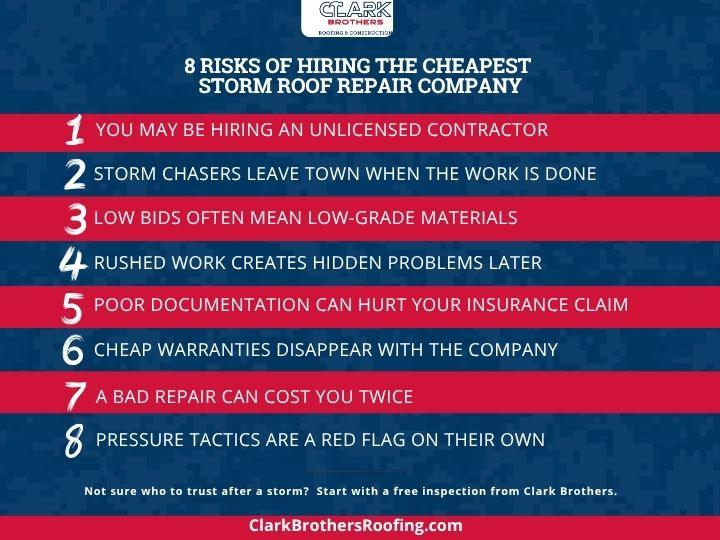
1. Low Prices Can Signal Unlicensed or Underqualified Work
Georgia requires roofing contractors to carry proper licensing and insurance before performing work on residential properties. Contractors who bid significantly below market rates are sometimes cutting costs by skipping those requirements.
That matters for a few reasons. If an unlicensed contractor makes a mistake or causes additional damage, you have very limited recourse. And if someone gets hurt on your property during an uninsured job, you could be left holding liability that was never yours to begin with.
Before agreeing to any storm roof repair, ask to see a copy of the contractor’s license and proof of current general liability and workers’ compensation insurance. A reputable company will have no problem providing both.
2. Storm Chasers Prioritize Volume Over Quality
After a significant weather event, storm chasers move into affected markets quickly. These are contractors, often from out of state, who follow storm damage from city to city. Their business model depends on closing as many jobs as possible in a short window before moving on to the next storm-hit area.
That is not a model built around quality workmanship or long-term accountability. It is built around speed and volume.
When something goes wrong with the repair six months later, those contractors are often long gone. There is no local office to call, no team to send back, and no warranty worth the paper it is printed on.
Working with a licensed local contractor means working with someone who has a permanent presence in the community and a reputation to protect—especially for storm roof repair projects.
3. Substandard Materials Drive Down Bids
One of the most straightforward ways to drop a project price is to use cheaper materials. Not all shingles, underlayment, or flashing perform the same way, and the differences are not always visible once the job is done.
Contractors who underbid legitimate estimates often substitute lower-grade products to protect their margins. Those materials may hold up fine initially, but they tend to fail earlier under Georgia’s heat, humidity, and storm exposure.
Ask specifically what materials are being used, get that information in writing, and compare it across bids. If one estimate is dramatically lower and the material specs are vague or missing entirely, that is worth investigating before moving forward with your storm roof repair.
4. Rushed Work Creates Hidden Damage
Speed and quality are often in tension with each other. Contractors who are moving fast through a neighborhood full of storm jobs may be cutting corners you will not notice right away.
Common issues that result from rushed roof work include:
- Improperly driven nails that compromise shingle adhesion
- Flashing that is installed incorrectly around chimneys, vents, or skylights
- Underlayment that is skipped or inadequately applied
- Shingles that are not properly aligned or seated
These problems do not always show up immediately. They tend to surface during the next heavy rain or in the months that follow as materials settle and gaps open up. By the time you notice the symptoms, the contractor who caused them may no longer be reachable.
5. Your Insurance Claim Could Be Complicated
If the contractor you hire does not document the work properly, uses incorrect materials, or installs the repair in a way that does not meet code, it can create problems with your insurance claim or void coverage related to that portion of the roof in the future.
Insurance companies expect repairs to be done to code and documented correctly. When that documentation is missing or the work does not meet the standard required, homeowners sometimes find that future claims for related damage are denied.
Working with a contractor who understands the storm roof repair insurance process, communicates with your adjuster when needed, and provides proper documentation protects you well beyond the immediate job.
6. Warranties May Be Worthless
A warranty is only as good as the company standing behind it. Many storm chasers and low-bid contractors offer warranties in writing, but those warranties disappear along with the company when they leave town or go out of business.
Even local contractors can offer warranties that are too vague or full of exclusions to be useful. Before signing a contract, look carefully at what the workmanship warranty actually covers, how long it lasts, and what process you would follow to use it.
Reputable contractors back their storm roof repair work with clear, transferable warranties and a local presence that means you can actually hold them accountable if something goes wrong.
7. You May End Up Paying Twice
This is the risk that homeowners most often underestimate. A repair that fails, causes additional water intrusion, or creates structural issues ends up costing far more than the original job would have if done correctly.
Water damage spreads. A poor flashing installation becomes a ceiling stain, then a damaged rafter, then a mold issue in the attic. Each step in that chain adds cost. And if the original contractor is unreachable, none of that falls on them. It falls on you.
Choosing a qualified contractor the first time is almost always cheaper than fixing a bad storm roof repair later, even when the upfront cost is higher.
8. Pressure Tactics Are a Warning Sign on Their Own
Contractors who arrive uninvited shortly after a storm, push for a quick decision, or offer pricing that expires within 24 hours are often using urgency to prevent you from doing the due diligence that would rule them out.
High-pressure sales tactics are not a feature of companies with strong reputations. They are a tactic used by contractors who know that a slower, more careful homeowner would not choose them.
You are never obligated to decide on the spot. Any contractor worth hiring will give you time to review the contract, check their references, and verify their licensing before you commit to any storm roof repair project.
What to Look for Instead
The goal is not to pay the most. It is to hire a contractor who will do the job right, stand behind their work, and be reachable if something comes up later.
When evaluating contractors after a storm, consider:
- Verified local licensing and insurance
- A documented history of work in the Atlanta area
- Clear material specs in the written estimate
- References or reviews from homeowners in your area
- A warranty that is specific, written, and backed by a company with a local presence
- A team that communicates clearly and does not pressure you into a fast decision
A Note From Clark Brothers
At Clark Brothers, we are a veteran-owned, family-run roofing and exterior company based in Metro Atlanta. We have seen firsthand what happens when homeowners hire contractors who prioritize a low number over a quality job. Our team offers complimentary storm damage inspections, honest assessments of what your roof actually needs, and transparent pricing grounded in doing the work right the first time.
We are not here to win the bid. We are here to earn your trust and protect your home.
If you need guidance after a storm or want a second opinion before moving forward with a storm roof repair, we’re here to help you make a confident, informed decision.
For more information about storm-related roofing damage and the repair process, homeowners can also explore the Clark Brothers Storm Damage Roof Repair Guide.