
A storm moves through overnight. By morning, you’re standing in a parking lot looking up at your building, wondering what emergency commercial roof repair is going to look like and what it’s going to cost.
Commercial roof storm damage rarely announces itself clearly. What looks minor from the ground can mean standing water, compromised membrane seams, or interior water intrusion that’s already started. What looks serious sometimes turns out to be surface debris. The only way to know is a professional assessment, and the clock starts the moment the storm passes.
This guide walks property managers and building owners through the right steps after storm damage, starting immediately and moving through inspection, documentation, temporary protection, and repair. Getting the sequence right matters more than moving fast.
Why Commercial Storm Damage Is Different from Residential
Most commercial roofs in Metro Atlanta are low-slope or flat systems. TPO, EPDM, modified bitumen, and built-up roofing all respond to storm events differently than the pitched asphalt shingle roofs most people picture when they think of roofing damage.
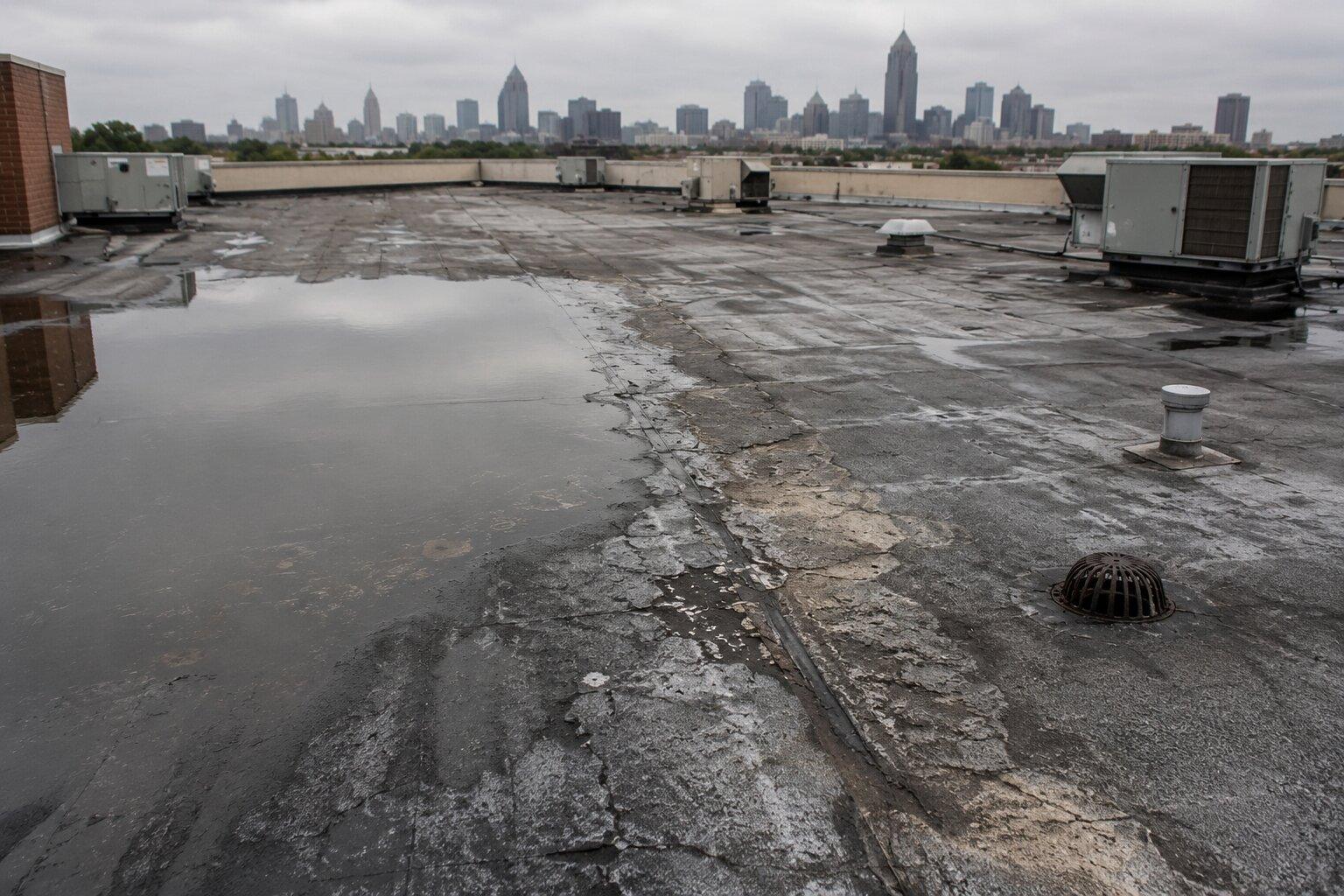
Flat and low-slope roofs are more vulnerable to ponding water after heavy rain events. A membrane that takes a direct hail impact may not fail immediately, but can develop micro-fractures that compromise the system over weeks. High winds can lift seams, separate flashings from parapet walls, or displace equipment curbs in ways that create water entry points that aren’t visible until the next rain.
The other difference is scale. A single storm event on a 20,000 square foot commercial roof can involve multiple damage zones, and an incomplete assessment can mean missing a critical failure point while focusing on the most visible one.
This is why a trained commercial roofing inspector and a residential roofer are not interchangeable after a storm.

Step 1: Prioritize Safety First
Before anything else, confirm that the building is structurally safe for occupancy. A major storm event can compromise more than the roof surface. Look for signs of structural stress, ceiling collapse, or significant water intrusion into occupied areas.
Do not send maintenance staff onto the roof immediately after a storm. Wet roofing surfaces are slippery, and post-storm conditions may include displaced equipment, debris, or compromised walkway systems. Leave the roof assessment to a professional inspection team with the right safety equipment and commercial roofing experience.
If active water intrusion is affecting occupied areas, move equipment, inventory, or personnel away from affected zones and document where water is entering before anything is moved or dried.
Step 2: Document Everything Before Repairs Begin
Documentation is the foundation of a successful commercial storm damage claim. The more thorough your documentation is before any temporary or permanent repairs, the stronger your position when working with your insurance carrier.
From the ground and any safe access points available, document the following:
- Visible damage to the roof surface, flashings, and penetrations
- Any displaced or damaged rooftop equipment, HVAC units, or curbs
- Damage to gutters, downspouts, and drainage systems
- Interior water intrusion points, including ceiling stains, wet insulation, or standing water
- The date, time, and any local weather service confirmation of the storm event
Photograph and video everything. Take wide shots to establish context and close-ups to document specific damage points. Time-stamp your documentation if possible.
Do not make permanent repairs before your insurance adjuster has assessed the damage. Temporary protection to prevent further water intrusion is appropriate and expected. Permanent repairs completed before the adjuster visit can complicate your claim.
Step 3: Get a Professional Commercial Roof Inspection Immediately
A professional commercial roof inspection after a storm does two things. First, it gives you an accurate picture of the actual damage rather than what’s visible from the ground. Second, it creates an inspection report you can use with your insurance carrier.
Not every commercial roofing contractor has experience with all roof system types. When you schedule an emergency inspection, confirm that the contractor has direct experience with your specific roofing system, whether that’s TPO, EPDM, modified bitumen, or another material.
A qualified commercial inspector will assess:
- Membrane condition across the full roof field, not just visible damage areas
- Seam integrity, particularly at laps and around penetrations
- Flashing condition at parapet walls, drains, curbs, and transitions
- Drainage system performance and any ponding water concerns
- Rooftop equipment anchorage and any displaced or damaged components
- Decking condition where membrane damage has exposed the substrate
The inspection report should be detailed enough to support an insurance claim and specific enough to scope a repair accurately.
Clark Brothers provides commercial roofing services throughout Metro Atlanta and North Georgia. Learn more about our commercial roofing services.
Step 4: Arrange Temporary Protection if Needed
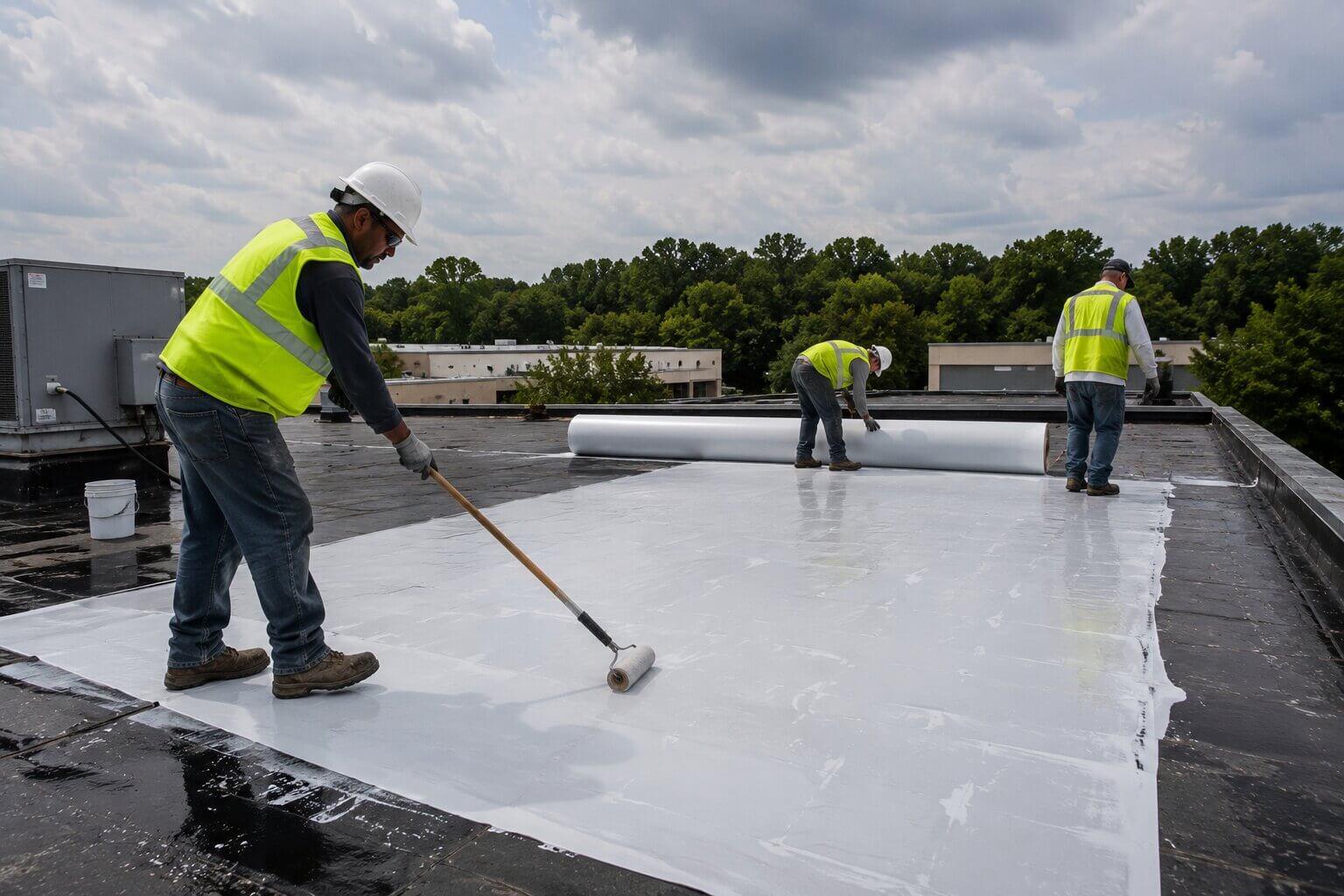
If the inspection identifies active or likely water entry points, temporary protection should be arranged before the next rain event. For commercial roofs, this typically means emergency membrane patching, seam sealing, or, in more serious cases, temporary tarping over compromised areas.
Temporary protection is not a substitute for proper repairs. It is a bridge that limits additional damage to the building interior, equipment, and inventory while permanent repairs are being scoped, approved, and scheduled.
Document all temporary protection work. Photographs of what was done, where, and when are relevant to your insurance claim and create a clear record of the repair timeline.
Step 5: Navigate the Insurance Process Carefully
Commercial property insurance claims for storm damage follow a process that rewards documentation and preparation. A few practical points worth knowing before you engage your carrier:
Contact your carrier promptly. Most commercial policies require timely notification of a loss event. Delaying contact can create complications with your claim.
Keep maintenance records accessible. Insurance carriers assess pre-existing conditions as part of the claims process. A roof with documented regular maintenance and no deferred repairs is in a stronger position than one without records. If you have prior inspection reports, maintenance invoices, or repair history, pull those together before the adjuster visit.
Have your inspection report ready before the adjuster arrives. Your commercial roofing contractor’s inspection report gives you an independent assessment to compare against the adjuster’s scope. Gaps between the two are common and can be addressed through a supplement process.
You do not have to navigate this alone. An experienced commercial roofing contractor can walk the roof with your adjuster, answer technical questions about the system, and help ensure the full scope of damage is accounted for in the claim.
Common Commercial Roof Systems and How They Respond to Storm Damage
Understanding your roofing system helps you ask better questions and understand what an inspector is looking for after a storm.
TPO (Thermoplastic Polyolefin)
One of the most common commercial roofing systems in Metro Atlanta. TPO is a single-ply membrane that is heat-welded at seams. Hail can cause impact damage to the membrane surface. High winds can stress seams and flashings. After a storm, seam integrity is the primary concern on a TPO roof.
EPDM (Ethylene Propylene Diene Monomer)
A rubber-based single-ply membrane. EPDM is durable but can be punctured by debris impact. Adhesive and taped seams are more vulnerable to wind uplift than heat-welded systems. Inspect seams and any areas where debris made contact with the surface.
Modified Bitumen
A multi-layer asphalt-based system that offers good impact resistance. Modified bitumen is less vulnerable to hail than single-ply systems but can experience seam separations and flashing failures in high-wind events. Blistering or bubbling after a storm can indicate moisture intrusion into the system layers.
Built-Up Roofing (BUR)
Multiple layers of bitumen and reinforcing fabric, often topped with aggregate. BUR systems have good resistance to puncture and impact but can develop gravel displacement from severe hail, which exposes the surface to UV degradation. Drainage is a particular concern on BUR systems after heavy rain events.

How Long Does Emergency Commercial Roof Repair Take?
Timeline depends on the extent of the damage, the roofing system type, material availability, and weather conditions. A few realistic benchmarks:
- Emergency inspection: typically same day or next day, depending on contractor availability and demand after a regional storm event
- Temporary protection: usually completed within 24 to 48 hours of the inspection
- Insurance adjuster visit: timing varies by carrier, but most schedule within 5 to 10 business days of claim filing
- Permanent repairs: once approved, scheduling depends on crew availability and material lead times. Straightforward repairs on accessible roof areas can often be completed within a week of approval. Larger scopes take longer.
The biggest variable in commercial storm repair timelines is usually the insurance process, not the construction work. Getting your documentation in order quickly and having an experienced contractor engaged early tends to compress the overall timeline.
Frequently Asked Questions
Can I wait to have my commercial roof inspected after a storm?
Every day of delay increases the risk of water intrusion and interior damage. After a significant storm event, commercial roofing contractors get booked quickly across the region. Contact a roofing contractor as soon as conditions are safe, even if visible damage looks minor from the ground.
Do I need a commercial roofing specialist, or can any roofer inspect my building?
Commercial roofing systems require specific expertise. A contractor familiar with residential asphalt shingles may not have the training or equipment to properly assess a TPO, EPDM, or modified bitumen system. Look for a contractor with documented commercial experience and familiarity with your specific roof type.
What is the difference between temporary repair and permanent repair?
Temporary repair limits additional damage while permanent repairs are being scoped and approved. It typically involves patching or sealing active water entry points. Permanent repair addresses the root cause and restores the roof system to its full designed performance. Both matter, and temporary repair should never be treated as a long-term solution.
How do I know if my commercial roof needs full replacement versus repair after a storm?
A qualified inspection will help answer this. In general, isolated storm damage on a roof that was otherwise in good condition is a repair scenario. Widespread damage, significant age, or storm damage that has exposed underlying system deterioration may make replacement the more cost-effective path. Your contractor should be able to walk you through both options with specifics.
Does Clark Brothers work on commercial properties throughout Metro Atlanta?
Yes. Clark Brothers provides commercial roofing services across Metro Atlanta and North Georgia, including emergency response after storm events.
Commercial storm damage is stressful. The building is your responsibility, and when the roof is compromised, everything inside it is at risk. The property managers and building owners who navigate it best are the ones who move quickly, document thoroughly, and work with a contractor who knows commercial systems.
If your commercial property has been affected by a recent storm event, the Clark Brothers team is available for emergency inspections throughout Metro Atlanta and North Georgia. Reach us at (678) 929-7072 or visit our website to learn more about our commercial roofing services.