Most business owners don’t think much about their roof until something goes wrong. Then the decision that felt routine, hiring a commercial roofing contractor, suddenly carries real weight. A missed detail in a proposal, a crew that disappears mid-project, or a scope that changes after the work has already started can cost far more than the roof itself. It can mean lost operating hours, tenant complaints, or a liability issue that lands back on your desk months later.
The good news is that most of that risk is avoidable. It comes down to knowing what to check before you sign anything, not after.
What to Check Before Hiring a Commercial Roofing Contractor
Licensing and insurance specific to commercial work
A general contractor license and proof of liability insurance are the baseline, but commercial roofing carries its own risk profile. Ask specifically about workers’ compensation coverage and whether their insurance covers work at the height and scale of your building.
Experience with your roof system
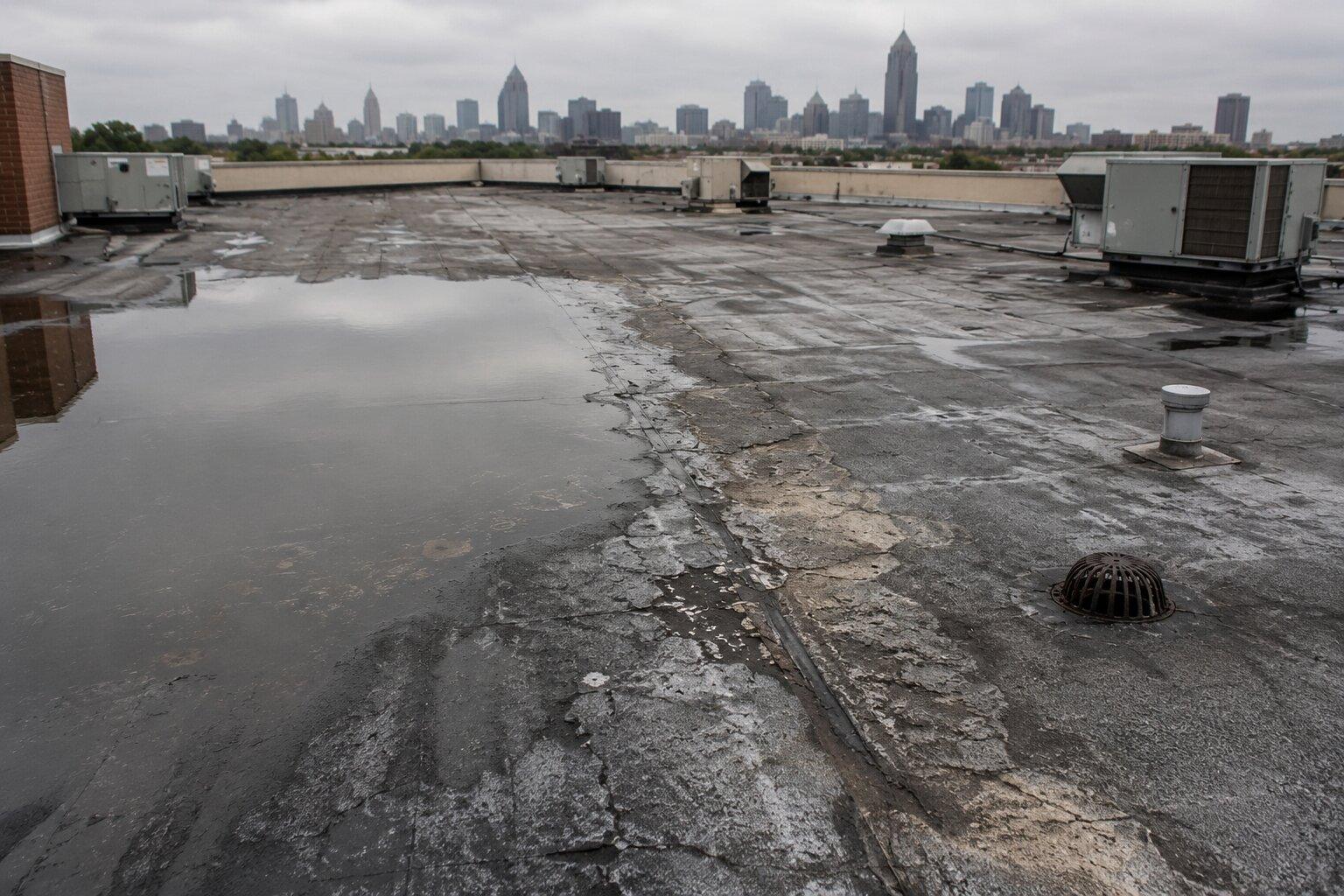
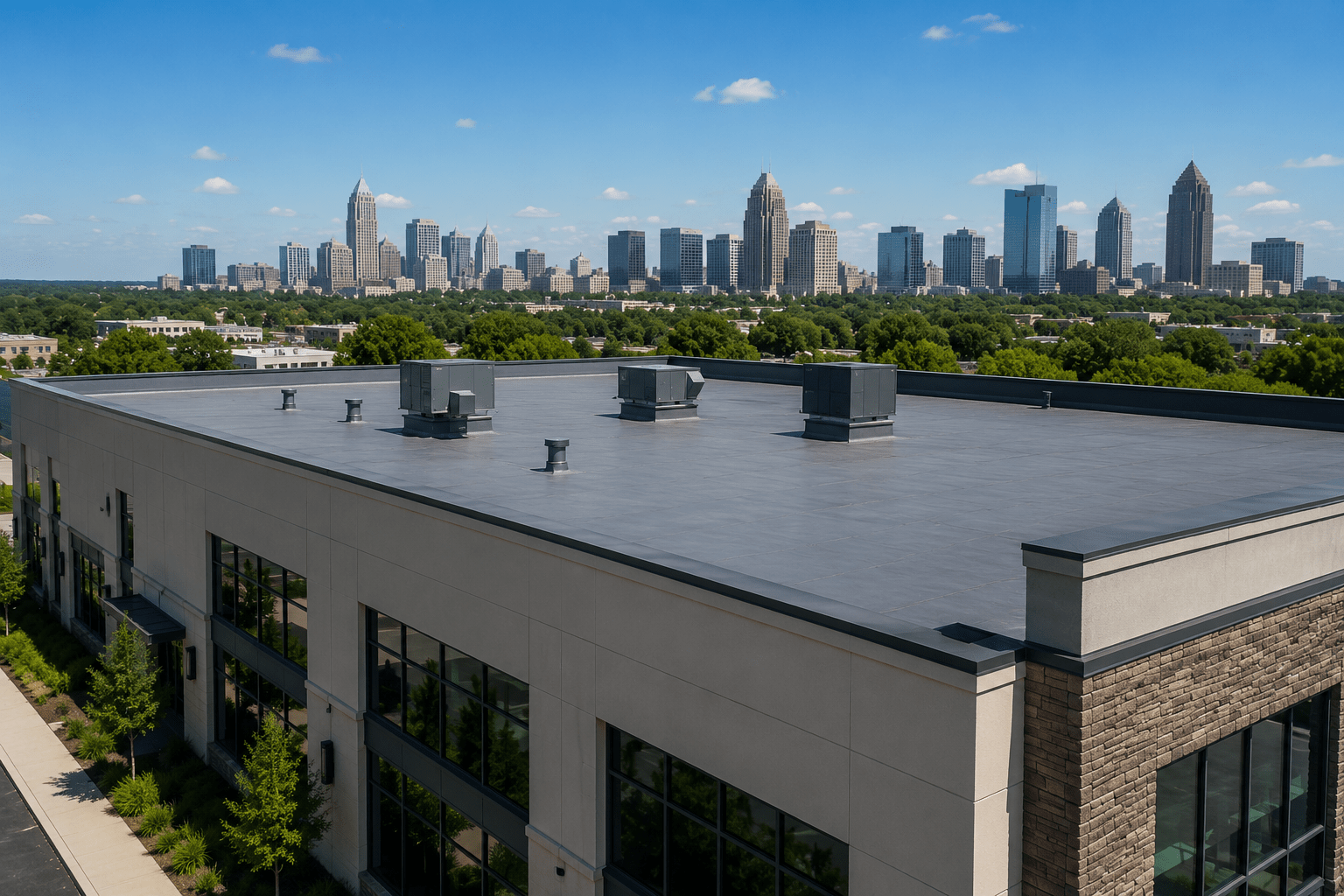
A contractor who mainly works on steep residential roofs may not be the right fit for a low-slope commercial membrane. Commercial buildings typically use one of a handful of systems: TPO, EPDM, PVC, metal panel, or built-up roofing, and each comes with its own installation techniques, seam methods, and failure points. A crew that’s spent most of its time on asphalt shingles isn’t automatically equipped to spot a failing TPO seam or know how a built-up roof ages differently in Georgia heat.
Ask how many similar systems they’ve installed or repaired in the last year, and ask to see examples. It’s a fair question, and a contractor who genuinely works on commercial roofs regularly won’t hesitate to answer it.
A clear communication process
Before work begins, you should know exactly who your point of contact is, how often you’ll hear from them, and what happens if the scope changes once the crew is on the roof. Vague answers here are usually a preview of how the project will go.
References or completed commercial projects
Ask for at least two or three properties similar in size or use to yours, and actually call them. A contractor confident in their work will make this easy.
Warranty terms in writing
Workmanship warranties and manufacturer warranties are not the same thing, and the difference matters if something fails a few years down the road. Get both spelled out before you sign.

Red Flags to Watch For
A few warning signs are worth taking seriously, even if everything else about a proposal looks fine:
- Door-to-door solicitation immediately after a storm, especially with pressure to sign the same day
- No local address or a license number that can’t be verified
- A quote with no written scope of work, just a total price
- Reluctance to provide references or examples of past commercial projects
- Vague or shifting answers about who will actually be on-site during the work

What This Looks Like With Clark Brothers
As a veteran-owned, family-run company, Clark Brothers approaches commercial projects the same way we approach every job: licensed, insured, and communicative from the first conversation. Property managers and business owners get a single point of contact throughout the project, a written scope before any work begins, and a team that shows up when they say they will.
We’re not the contractor who disappears after the deposit clears. If a commercial roof issue is on your radar, our commercial roofing services team can walk through what a project like yours typically involves before you ever compare bids.
Frequently Asked Questions
How long does it take to get a commercial roofing quote?
Most reputable commercial roofing contractors can provide a written estimate within a few business days of an on-site inspection, depending on the size and complexity of the roof.
Should I get multiple bids for a commercial roofing project?
Yes. Comparing two or three written scopes, not just prices, is the best way to see what each contractor is actually proposing to do.
What’s the difference between a workmanship warranty and a manufacturer’s warranty?
A workmanship warranty covers the quality of the installation itself, while a manufacturer’s warranty covers the roofing materials. Ask for both in writing before work begins.
Do I need a licensed general contractor for commercial roof work?
In most cases, yes. A verifiable GC license and commercial liability insurance are two of the fastest ways to rule out contractors who aren’t equipped for the job.
How do I know if a roofing bid is too low?
A bid that comes in noticeably lower than others often means something is missing from the scope, lower-grade materials, no warranty, or corners cut on tear-off and disposal. Compare what’s actually included line by line, not just the total.
Does the type of commercial roof I have affect who I should hire?
Yes. TPO, EPDM, PVC, metal, and built-up roofing all require different installation and repair techniques. A commercial roofing contractor with proven experience on your specific system is far less likely to run into avoidable issues.
Final Thoughts
Choosing a commercial roofing contractor doesn’t have to feel like a gamble. A little diligence upfront, checking licensing, asking the right questions, and getting everything in writing, goes a long way toward protecting your building and your budget. If you’re comparing contractors for an upcoming project, our team is happy to walk through what to expect with a complimentary inspection, no pressure, no obligation.