By this point in a Georgia summer, your deck has already been through a lot. Months of direct sun, sudden afternoon storms, and the kind of humidity that never really lets up all take a toll on wood, fasteners, and finish. Most of it happens gradually enough that it’s easy to miss until something feels off underfoot or looks different than it did in the spring.
Here are the signs of deck damage to actually look for, and how to tell the difference between normal wear and something worth having looked at.
Signs of Deck Damage From Heat and the Sun
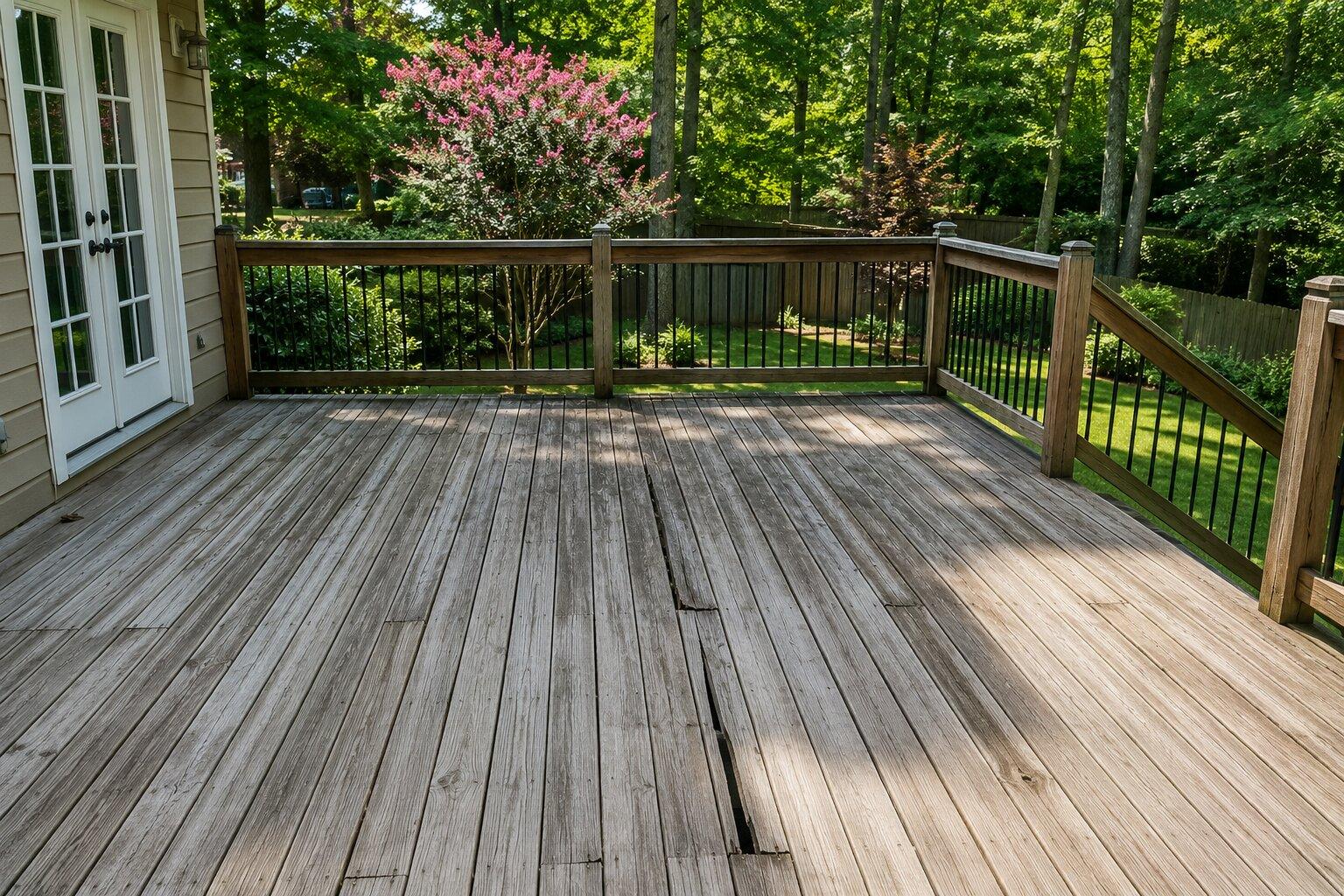
Fading or graying wood. UV exposure breaks down the finish and natural oils in wood over time, which is why decks often look noticeably duller by mid-summer than they did in April or May.
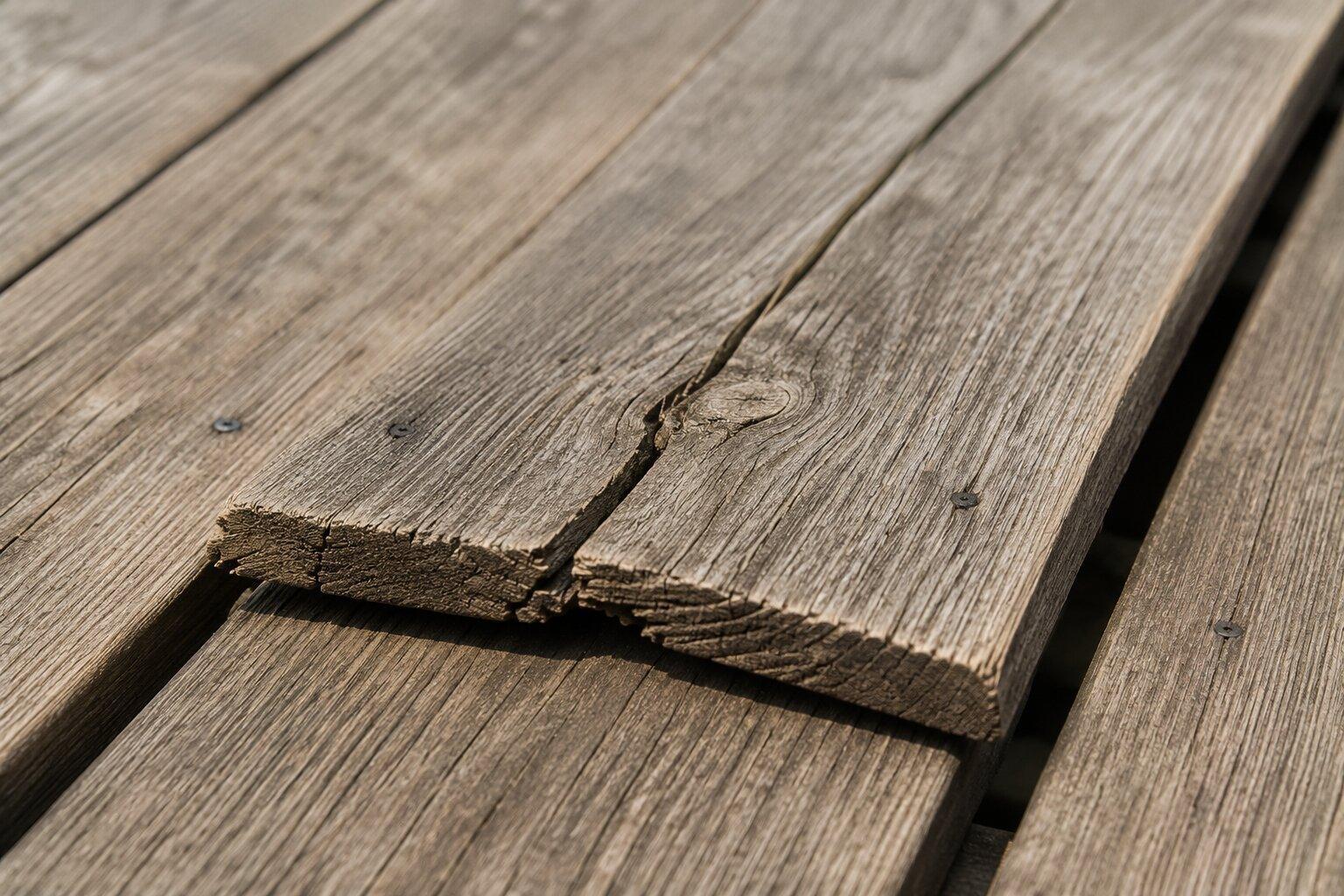
Cracking or splitting boards. Repeated cycles of heat during the day and cooler temperatures at night cause wood to expand and contract. Over a full summer, that constant movement can create small cracks that widen if they’re left alone.
Warped or cupped boards. When one side of a board dries out faster than the other, it can start to curl or warp. This is more common on boards that don’t get even sun exposure throughout the day.
Signs of Deck Damage From Humidity and Moisture
Heat gets most of the attention, but Georgia humidity is just as hard on a deck, especially in shaded areas or spots where water tends to collect:
- Swelling or soft spots in the wood, particularly near board edges or around fasteners
- Mold or mildew growth, often showing up as dark spots in shaded or poorly ventilated areas
- Rusted, discolored, or popping nails and screws, which can happen as moisture works its way into fastener holes
- A musty smell near the deck, especially close to the house or under the structure

Structural Signs of Deck Damage Not to Ignore
A few signs go beyond cosmetic wear and are worth addressing sooner rather than later:
- Railings that feel loose or wobble when you lean on them
- Stairs that flex, creak more than usual, or feel unstable
- Soft or spongy spots when you walk across certain boards
- Visible gaps where boards have pulled away from the frame
None of these mean the whole deck needs to be replaced, but they’re the kind of thing that’s worth a second look before your next cookout or gathering, not after.
What This Looks Like With Clark Brothers
These signs of deck damage don’t automatically mean a full replacement is needed. Our team can take a look, tell you honestly what’s cosmetic and what’s worth addressing, and walk you through repair or deck replacement options without any pressure either way. Whether it’s tightening up a railing or replacing a few boards before Labor Day, we’ll give you a straight answer and a clear plan.
Frequently Asked Questions
How often should a deck be inspected?
Most decks benefit from a yearly check, ideally in spring before heavy summer use, plus a closer look anytime you notice soft spots, loose railings, or visible damage.
Can warped deck boards be fixed, or do they need to be replaced?
It depends on the extent of the warping. Minor cases can sometimes be addressed without full replacement, but boards with significant cupping or cracking usually need to be swapped out.
Is mold on a deck dangerous?
Mold and mildew on a deck surface are usually more of a maintenance issue than a health hazard outdoors, but they’re a sign moisture is sitting somewhere it shouldn’t, which is worth addressing before it spreads or affects the wood underneath.
Why does my deck feel wobbly even though the boards look fine?
Wobbling is often a sign of an issue below the surface, loose fasteners, a shifting post, or a weakening frame connection, rather than the boards themselves. It’s worth having someone take a look at the structure, not just the surface.
How long does a typical wood deck last in Georgia?
With regular maintenance, most wood decks last 10 to 15 years, though heat, humidity, and sun exposure can shorten that timeline if issues go unaddressed.
Final Thoughts
A little attention now can save you from a bigger repair later in the season. If your deck is showing fading, cracking, warping, or anything that feels unstable underfoot, it’s worth having a professional take a look before your next gathering. Our team offers a complimentary inspection to help you understand exactly where things stand, no pressure, no surprises.