
Imagine walking into your home after a long day, only to find it warmer than expected in the summer or draftier than usual in the winter, even though your HVAC system is running full blast. If your utility bills have been steadily rising with no clear cause, your windows could be the hidden problem.
While many Georgia homeowners think of insulation or HVAC systems as the main contributors to energy efficiency, windows play a surprisingly critical role. Poor-performing or outdated windows can sabotage your home’s comfort and energy savings without any visible red flags.
In this article, we’ll explore how windows affect home energy use, reveal four costly mistakes homeowners often make, and show you how to spot and fix issues before they turn into budget busters.
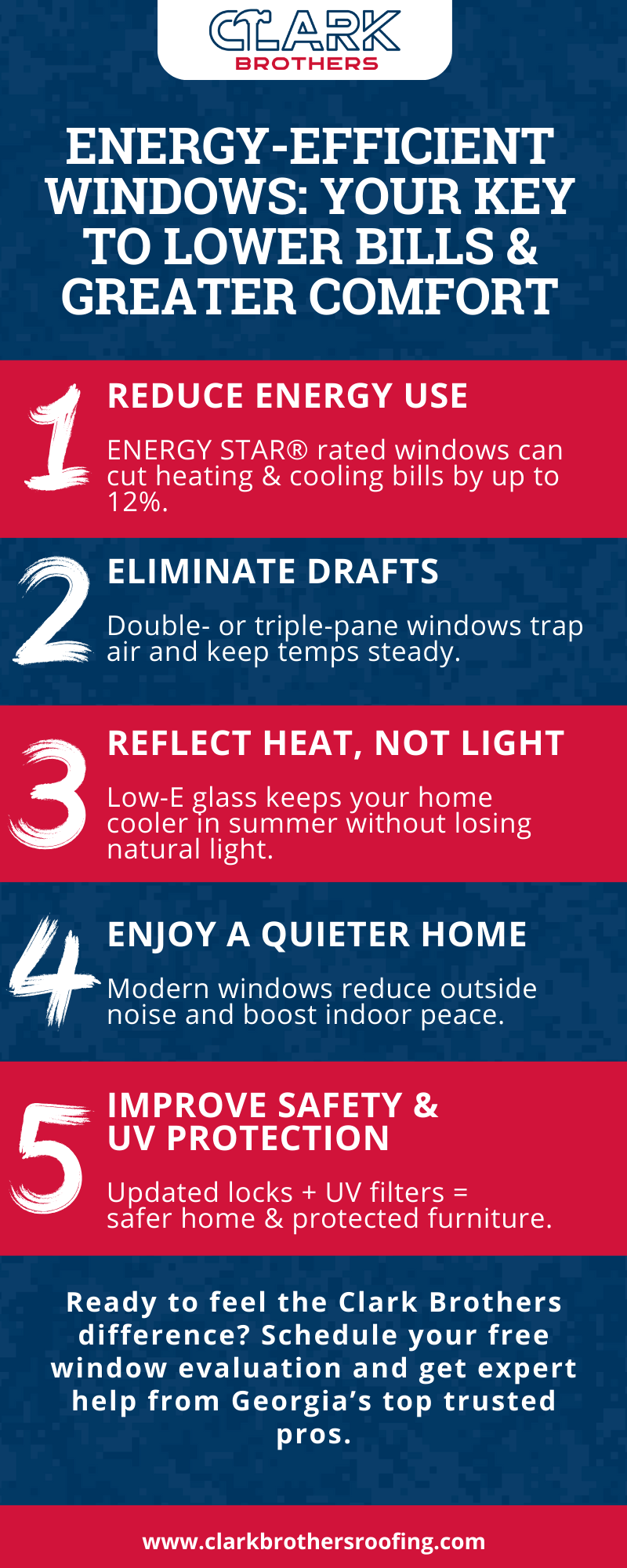
The Role Windows Play in Your Home’s Energy Efficiency
Your windows let natural light into your home, but they serve other purposes, too. They determine how much heat stays in your home during the winter and how much sunlight and heat get in during the summer. In Georgia’s climate, where hot summers and mild winters are the norm, this matters a lot more than most people think.
Heat naturally moves from warmer areas to cooler ones. That means in summer, heat wants to come in. In winter, it wants to get out. If your windows aren’t energy-efficient or properly sealed, they allow that heat to move freely. This forces your HVAC system to work harder, which increases your energy use and utility bills.
To better understand window performance, consider these terms:
- U-Factor: Measures how well a window prevents heat from escaping. Lower is better.
- SHGC (Solar Heat Gain Coefficient): Indicates how well a window blocks incoming heat from sunlight. Again, lower is better for warm climates.
- Low-E Glass: A microscopic coating that reflects infrared and UV rays, reducing heat gain while allowing natural light.
- Visible Transmittance: Measures how much visible light passes through the window.
In Georgia’s humid subtropical climate, where summers are long and hot, energy-efficient glazing can make a dramatic difference in both comfort and cost.
Ready to move forward? See our window replacement services in Atlanta.
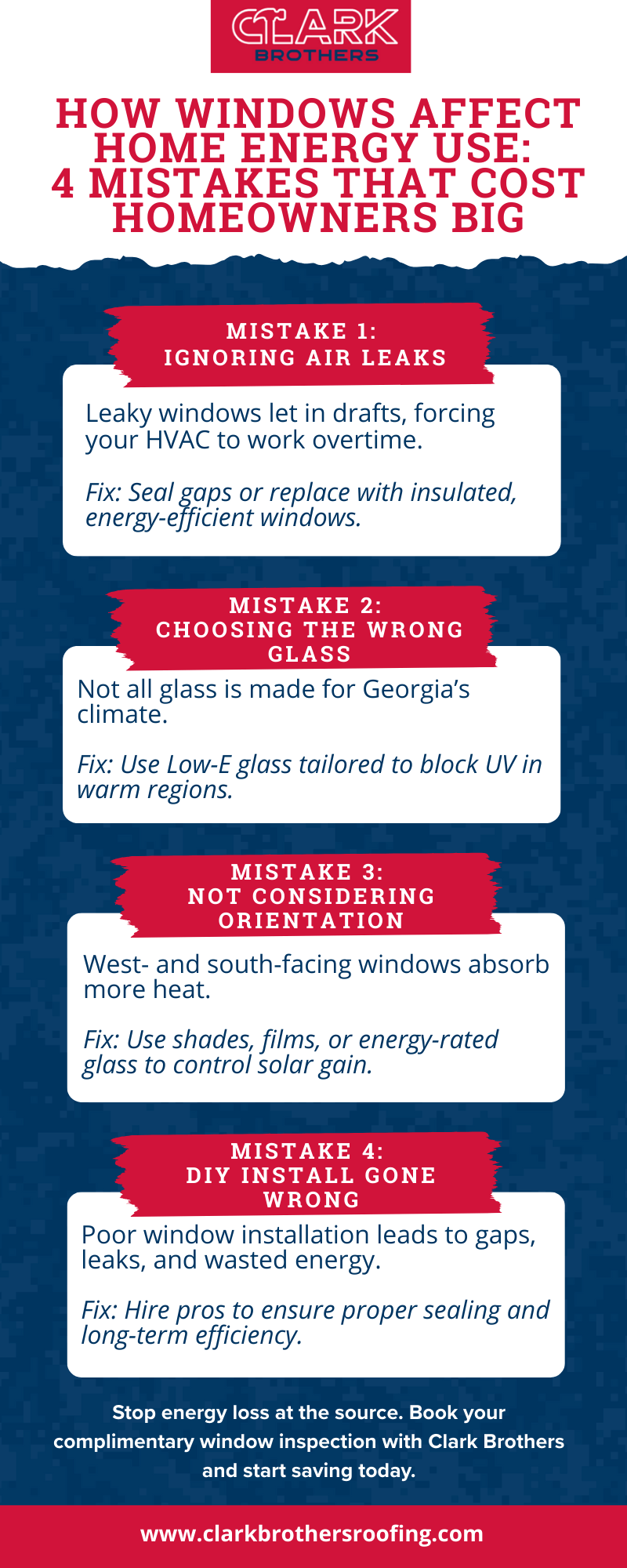
4 Expensive Mistakes Homeowners Make With Their Windows
Mistake 1: Replacing HVAC Systems Without Inspecting Window Performance
Upgrading to a high-efficiency HVAC system won’t lower your energy bills if your windows are leaking air or heat. If your windows are underperforming, your new system will still run longer and harder than necessary.
Mistake 2: Ignoring Drafts, Condensation, or Seal Failure
Condensation between window panes, drafts when windows are closed, or foggy glass may seem like minor annoyances, but they often point to broken seals or deteriorated insulation. These failures reduce the window’s energy performance and can lead to mold, mildew, and structural damage over time.
Mistake 3: Prioritizing Design Over Performance
It’s tempting to choose windows based on style alone, but ignoring material type and energy performance ratings can cost you in the long run. A beautiful window with poor insulation will drive up your heating and cooling bills year after year.
Mistake 4: Using Low-Cost or DIY Installation Methods
Even top-tier windows can underperform if improperly installed. DIY or budget installs often lack the sealing and flashing needed to maintain airtightness, leading to warping, drafts, and voided warranties.
Avoiding these mistakes can save thousands over time in energy bills, HVAC wear-and-tear, and premature window replacements.
Signs Your Windows Might Be Driving Up Your Energy Bills
You don’t have to be a contractor to notice when your windows aren’t doing their job. These issues tend to show up slowly, but they’re usually easy to spot once you know what to look for. Some rooms in your home might feel noticeably warmer or cooler than others, even when your thermostat is set to a consistent temperature. You may have seen a gradual increase in your energy bills, even though your household habits haven’t changed. Drafts are another giveaway, especially when you can feel airflow near windows that are supposed to be sealed tight. If you’ve noticed fog or condensation building up between panes of glass, that’s another sign the window’s seal may have failed. In homes with a lot of direct sunlight, you might even start to see fading on furniture or flooring near the windows.
If any of these signs sound familiar, your windows could be contributing to your rising energy costs. A simple way to check for air leaks is by holding a candle or stick of incense near the window frame. If the flame flickers or the smoke shifts, outside air is likely sneaking into your home.
What to Look for in Energy-Efficient Windows
If you’re planning to replace your windows, it’s important to choose options that are actually designed to save energy, especially in a warm climate like Georgia’s. Look for products that are ENERGY STAR certified for the Southeast, which means they meet regional performance standards that help lower cooling costs and improve comfort year-round.
Pay attention to the window’s U-Factor, which measures how well it keeps heat inside your home. The lower the number, the better. You’ll also want to check the Solar Heat Gain Coefficient, or SHGC, which tells you how much solar heat can pass through the glass. In hot climates, a lower SHGC will help keep your home cooler. Double or triple-pane glass that’s filled with gas like argon or krypton adds another layer of insulation, while Low-E coatings help reflect heat and block harmful UV rays. The frame material also plays a role. Vinyl, fiberglass, and composite frames are often better at resisting heat transfer compared to basic wood or aluminum options.
You don’t want to just buy the most expensive window. You’ll want to find some that fits your climate, your home’s needs, and your long-term energy goals.
Why Proper Installation Is Just as Important as the Window Itself
Even the best window on the market won’t perform the way it’s supposed to if it’s installed incorrectly. Small mistakes during installation can lead to big problems over time. If the frame isn’t level or sealed properly, air and moisture can get in around the edges. This can reduce energy efficiency and, in some cases, lead to water damage inside your walls. These kinds of issues often go unnoticed at first but eventually show up as drafts, rising energy bills, or even visible mold or staining.
Before hiring a contractor or installer, it’s smart to ask a few questions. Find out whether they follow the manufacturer’s installation instructions, which are designed to get the most out of the window’s performance. Ask whether they’ve been trained or certified to work with the specific brand you’re using. You can also ask about the materials they use for sealing and flashing, which play a big role in preventing air and water from getting in.
Taking a few minutes to ask these questions upfront can save you from headaches down the road and help protect your investment in energy-efficient windows.
Why Waiting Could Cost You More
It’s easy to put off window upgrades, especially when there are no obvious problems. But the cost of waiting isn’t always clear until the damage is done.
Every month that passes with inefficient windows means higher utility bills. There’s also increased strain on your heating and cooling system, leading to more frequent repairs and shorter equipment lifespan. And if you’re planning to sell your home soon, outdated windows can hurt your home’s value and turn off potential buyers.
On the flip side, new energy-efficient windows can lead to more consistent indoor comfort, lower long-term energy use, and better moisture protection. They also give you peace of mind knowing your home is protected from the inside out.
Make Smarter Window Decisions Today
Your windows play a bigger role in energy efficiency than you may think. From heat transfer to drafts and UV radiation, outdated or poorly installed windows could be quietly draining your wallet.
Avoid the four costly mistakes, watch for the warning signs, and choose replacements that align with your climate and comfort goals.
If you’re unsure where your home stands, Clark Brothers offers complimentary window inspections to help you evaluate performance, identify problems, and plan upgrades that make sense for your home, budget, and goals. Our licensed experts provide straightforward guidance and solutions designed for Georgia homes.
Schedule your no-obligation window assessment today and take the first step toward a more efficient, comfortable home.
Click here for our ultimate guide to improving your home’s exterior.