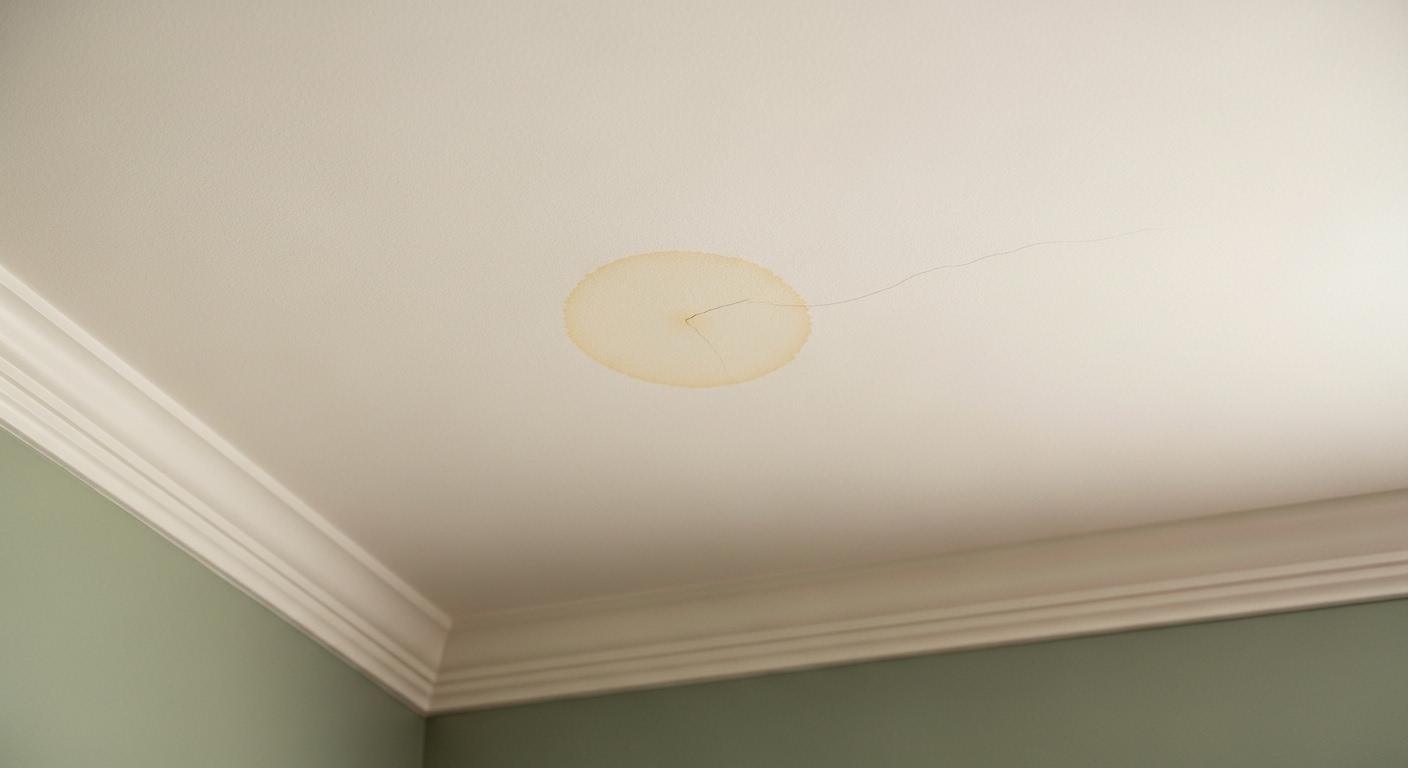
A water stain on the ceiling is often one of the first signs of ceiling water damage from a roof leak. For many homeowners, it can be surprising to discover damage inside the home when the roof itself looked perfectly fine from the outside.
In Georgia, storms, heavy rain, and seasonal weather changes can cause small roof issues that take time to become visible. By the time a ceiling stain appears, water may have already traveled through multiple layers of the home.
At Clark Brothers, we regularly inspect homes where ceiling discoloration or bubbling drywall turns out to be the first sign of a roof leak that started weeks or even months earlier. Understanding what to look for can help homeowners address problems early and avoid more serious repairs.
Signs of Ceiling Water Damage from a Roof Leak
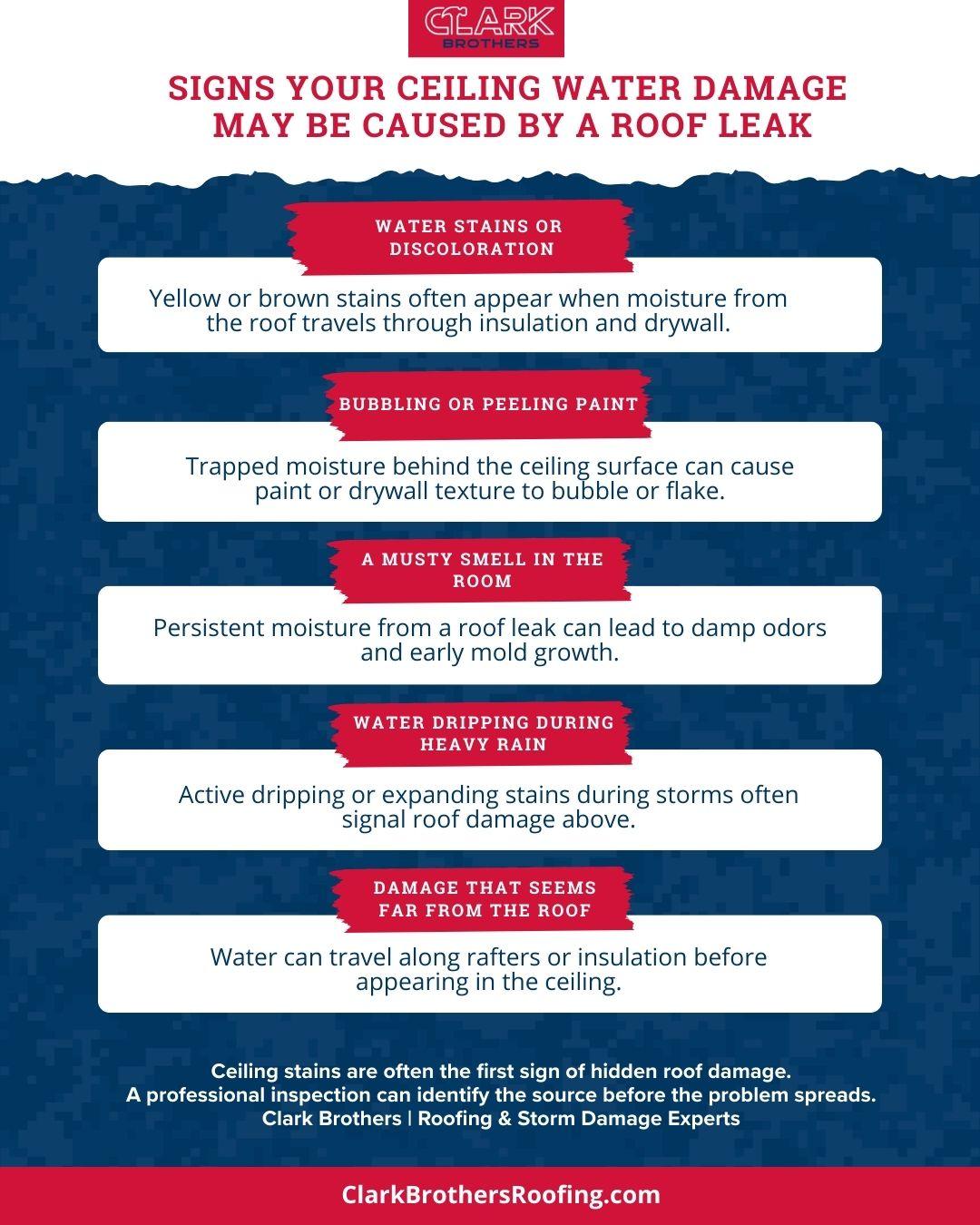
These warning signs often appear when water from a roof leak has already traveled through the attic or insulation before reaching the ceiling.
Homeowners often notice:
- Yellow or brown water stains on the ceiling
- Bubbling or peeling paint
- Soft or sagging drywall
- Small cracks or discoloration around light fixtures
- Damp or musty odors in a room
- Water dripping during heavy rain
These symptoms can show up long after the original roof damage occurred. In many cases, water slowly builds up in attic insulation or framing before it finally reaches the ceiling.
If you notice any of these signs, it’s worth taking a closer look at what might be happening above the ceiling.
Why Roof Leaks Often Show Up in the Ceiling First
Many homeowners assume that if their roof is leaking, they will immediately see ceiling damage or dripping water inside the home. In reality, water rarely travels in a straight line.
When water enters through damaged shingles or flashing, it often moves through the roof structure before becoming visible indoors. It can travel along roof decking, rafters, insulation, or wiring before it eventually reaches the drywall ceiling.
That is why the stain you see on the ceiling may not be directly below the location of the roof leak.
This also explains why some leaks only become noticeable after repeated rainstorms. Water may collect gradually in insulation or framing until enough moisture builds up to cause visible damage.
Common Causes of Roof Leaks That Lead to Ceiling Damage
Several roofing issues can allow water to enter the home and eventually cause ceiling damage.
Damaged or Missing Shingles
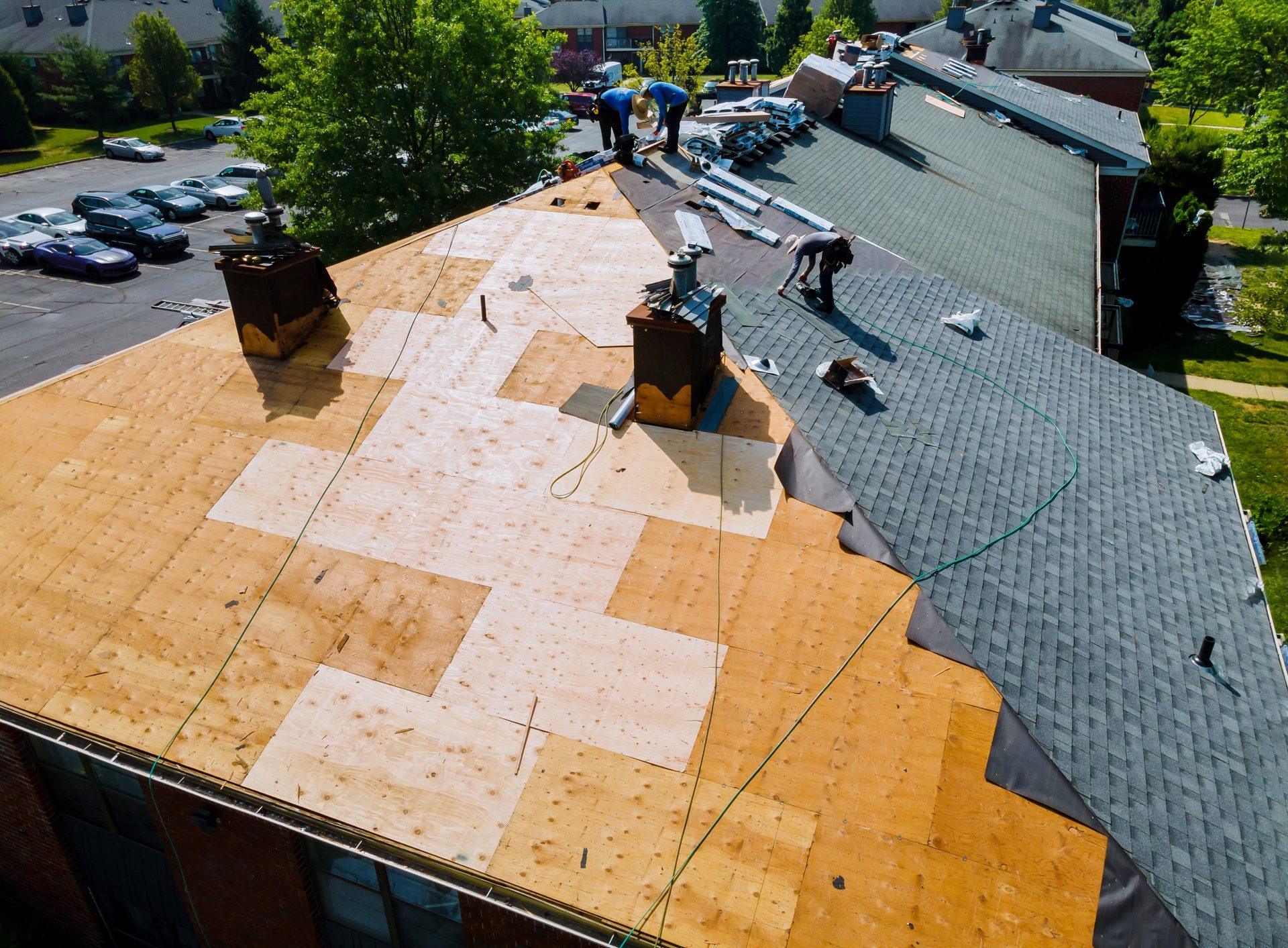
High winds and hail can loosen or remove shingles. Even small areas of damage can allow water to penetrate the roofing system during heavy rain.
Flashing Failures
Flashing protects vulnerable areas where the roof meets chimneys, vents, skylights, and valleys. If flashing becomes loose or deteriorated, water can slip underneath roofing materials.
Clogged Gutters or Drainage Issues
When gutters become blocked with debris, rainwater can back up under shingles or overflow near the roofline. Over time, this can allow moisture to enter the structure.
Storm Damage That Was Not Immediately Visible
Georgia storms can cause subtle roof damage that eventually leads to ceiling water damage inside the home. Hail bruising, lifted shingles, or small punctures may go unnoticed until water begins to appear inside the home.
During roof inspections, the Clark Brothers team often finds storm-related issues that homeowners didn’t realize were there.
What Happens If Ceiling Water Damage Is Ignored
A small stain on the ceiling may not seem urgent, but ignoring it can lead to larger problems over time.
Moisture trapped inside a home can lead to:
- Mold growth
- Damaged insulation
- Electrical hazards if water reaches wiring
- Wood rot in roof framing or decking
- Larger interior repair costs
The sooner the source of the leak is identified, the easier it is to prevent further damage.
What Homeowners Should Do If They Notice Ceiling Water Damage
If you discover water stains or other signs of ceiling damage, there are a few steps you can take to understand the situation better.
First, document the damage. Take photos of the stain or any areas that appear wet or deteriorated.
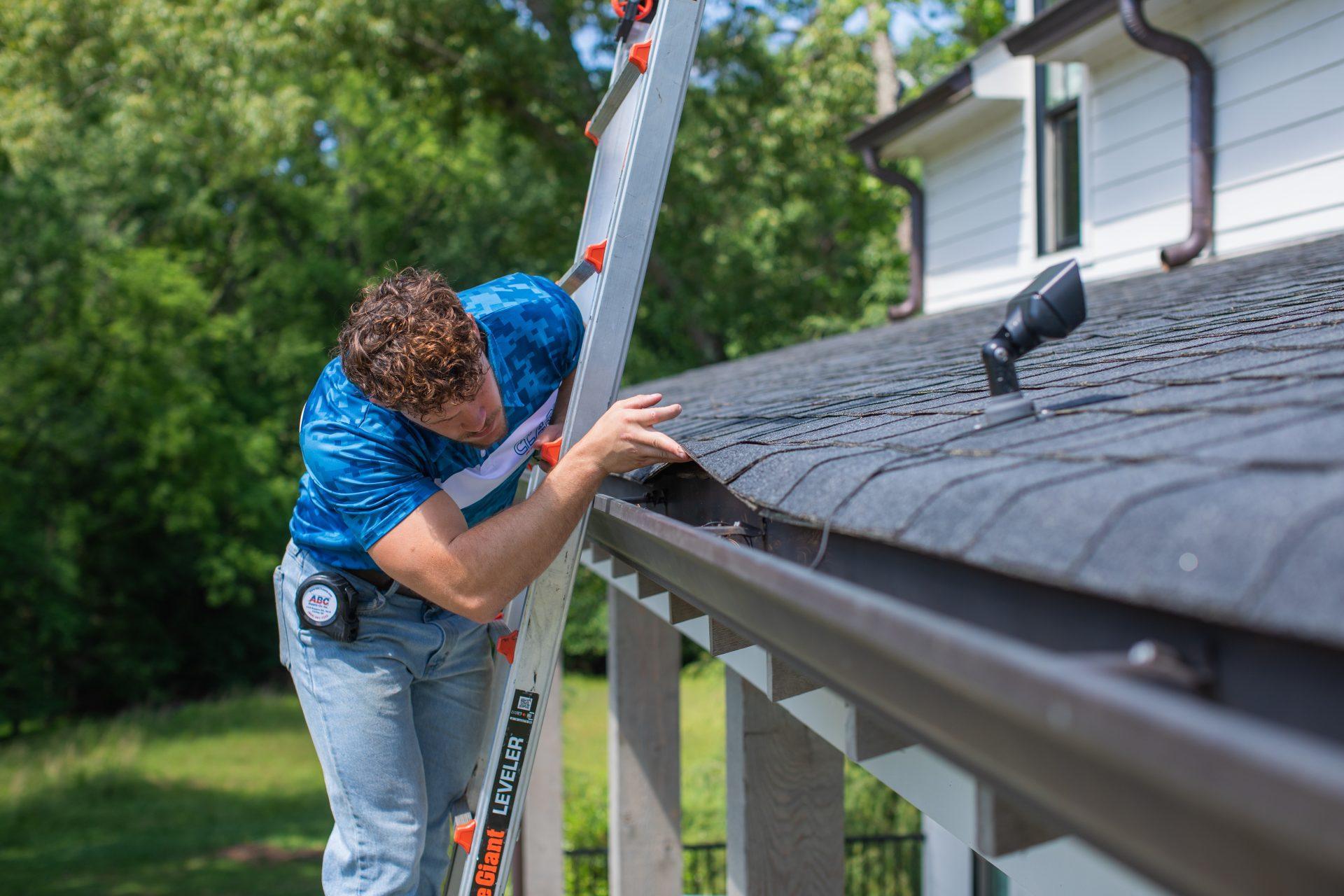
If it is safe to do so, check the attic for signs of moisture. Look for wet insulation, water trails on rafters, or damp wood.
You may also want to observe the area during the next rainstorm to see if the stain grows or if water becomes visible.
Avoid cutting into the ceiling or attempting interior repairs until the source of the leak is identified. Fixing the drywall before addressing the roof issue will only allow the problem to return.
Scheduling a professional roof inspection is often the most reliable way to determine where the leak originated.
How Roof Inspections Help Identify the Source
A thorough roof inspection looks at much more than just shingles.
When our team at Clark Brothers evaluates a roof, we check multiple areas that could allow water into the home. Many leaks we investigate started as small issues that went unnoticed after storms or seasonal weather changes.
- Shingle condition and wind damage
- Flashing around chimneys and vents
- Roof valleys and transition points
- Attic ventilation and insulation
- Signs of hidden storm damage
By examining both the exterior roof and the attic space, it becomes easier to determine how water is entering the structure and what repairs may be needed.
When Ceiling Damage May Be Covered by Insurance
In some situations, ceiling water damage caused by storm-related roof leaks may be covered by homeowners insurance.
Coverage often depends on the cause of the damage. Storm-related issues such as wind or hail damage are commonly covered, while long-term maintenance issues may not be.
Proper documentation and a professional inspection can help clarify what caused the problem and whether insurance may apply.
Can Ceiling Water Damage Mean You Need a Roof Repair?
Not always. In many cases, ceiling stains are caused by smaller roofing issues such as damaged flashing, loose shingles, or clogged drainage areas. A professional inspection can determine whether the problem requires a minor roof repair or a more involved solution. Addressing the issue early often prevents more extensive damage.
Frequently Asked Questions
Can a small roof leak cause ceiling damage?
Yes. Even a small leak can eventually lead to noticeable ceiling stains if water continues to enter the home over time.
How long does it take for a roof leak to show on the ceiling?
It varies. Some leaks become visible during the first heavy rain, while others may take weeks or months before damage appears.
Should I repair the ceiling before fixing the roof?
No. The roof issue should be addressed first to prevent the damage from returning.
Does homeowners insurance cover ceiling water damage?
Insurance coverage depends on the cause of the leak. Storm-related damage is often covered, while damage caused by neglect or long-term wear may not be.
Final Thoughts
Ceiling stains are often one of the first visible signs that something may be wrong with a roof. Because water can travel through the structure of a home before appearing indoors, the location of the damage does not always reveal where the problem started.
Addressing roof issues early can prevent more serious structural damage and help homeowners avoid larger repair costs down the road. Even a small leak can lead to bigger problems if it is left unresolved.
If you have noticed signs of ceiling water damage and are unsure what may be causing it, the team at Clark Brothers helps homeowners throughout North Georgia inspect roofing systems, identify the source of leaks, and determine the right next steps to protect their homes.
For more information about identifying and repairing storm-related roof damage, you can also explore our Guide to Storm Damage Roof Repair.