Severe storms can move through Georgia quickly, leaving homeowners to deal with damaged shingles, leaks, and other unexpected roofing problems. While the damage itself can be stressful, the insurance claim process often feels just as overwhelming.
Many homeowners file storm damage roof insurance claims every year, but small storm damage roof insurance claim mistakes during the process can lead to delays, confusion, or coverage issues.
At Clark Brothers, our team regularly helps homeowners inspect roofs after storms and identify damage that may qualify for insurance claims. Understanding a few common mistakes ahead of time can make the process much smoother and help protect your home from further damage.
Below are five storm damage roof insurance claim mistakes homeowners should avoid when filing a claim after severe weather.
Mistake 1: Waiting Too Long to Document Storm Damage
After a major storm passes, some homeowners assume that if their roof looks fine from the ground, everything must be okay. However, storm damage is not always immediately visible.
High winds, hail, and heavy rain can weaken shingles or flashing without creating an obvious leak right away. According to the National Weather Service severe thunderstorm safety guidance, storms can produce strong winds and hail capable of damaging roofing systems and other exterior structures.
If your area experienced severe weather, it is a good idea to document any visible signs of damage as soon as possible. Homeowners can start by:
- Taking photos of damaged shingles or debris on the roof
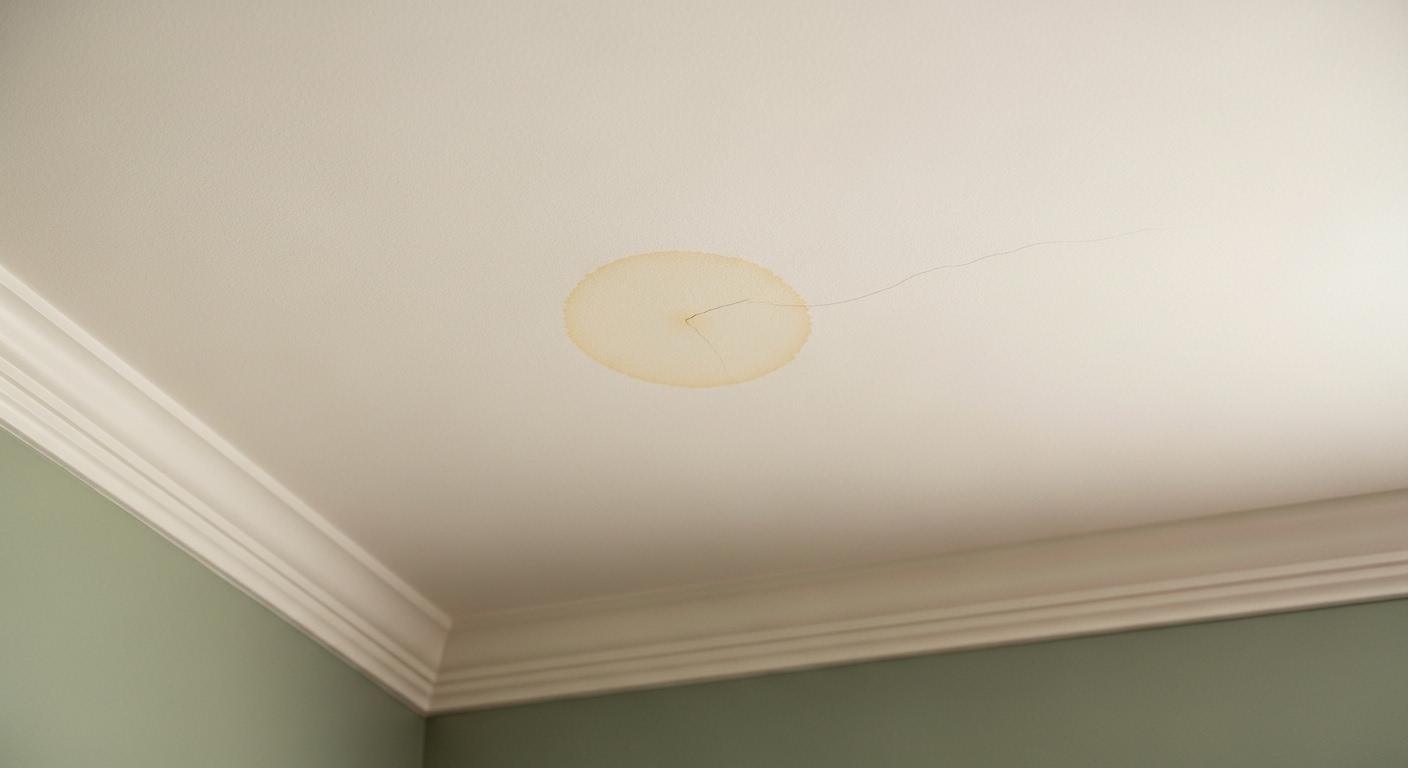
• Documenting ceiling stains or interior water spots
• Recording the date of the storm
Early documentation helps create a clear timeline if an insurance claim becomes necessary later.
Mistake 2: Making Permanent Repairs Before the Insurance Inspection
When homeowners notice a leak or damaged shingles, the instinct is often to fix the problem right away. While protecting your home from further damage is important, making permanent repairs before the insurance inspection can complicate the claim process.
Insurance companies typically need to inspect the damage before repairs begin. If repairs are completed too early, it may be difficult for an adjuster to determine what damage was caused by the storm.
Temporary measures such as covering exposed areas or containing interior leaks may be appropriate, but major repairs should generally wait until the inspection process is complete.
Mistake 3: Skipping a Professional Roof Inspection
Many homeowners rely solely on the insurance adjuster to determine whether roof damage occurred. While adjusters are experienced professionals, they may not always identify subtle roofing issues caused by wind or hail.
A professional roofing inspection can help identify problems such as:
- Lifted or creased shingles
• Hail bruising on roofing materials
• Flashing damage around vents or chimneys
• Early signs of leaks that may not yet be visible inside the home
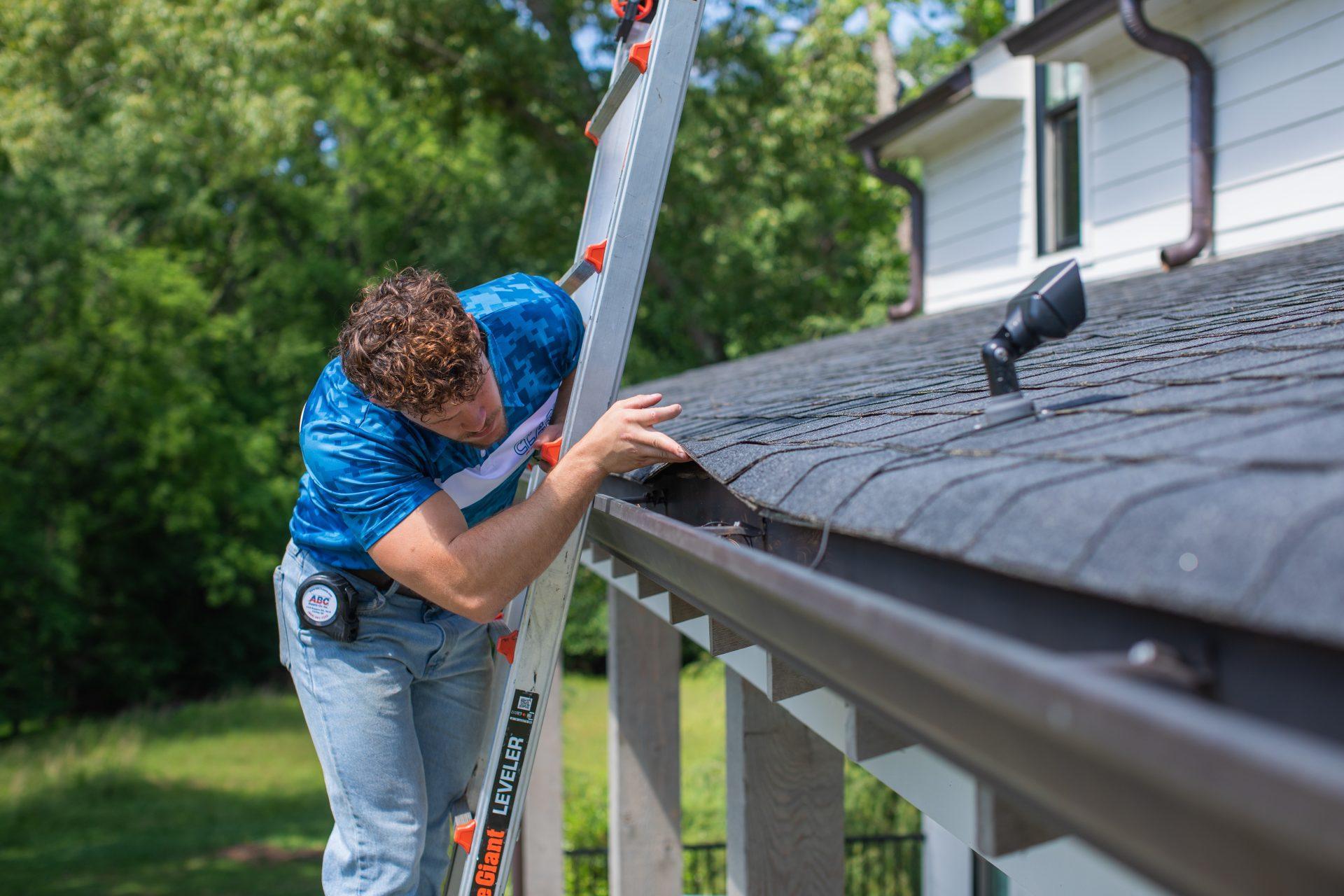
The Clark Brothers team frequently performs roof inspections after storms and often discovers damage that homeowners did not notice from the ground. Having a professional assessment can provide valuable documentation during the insurance claim process.
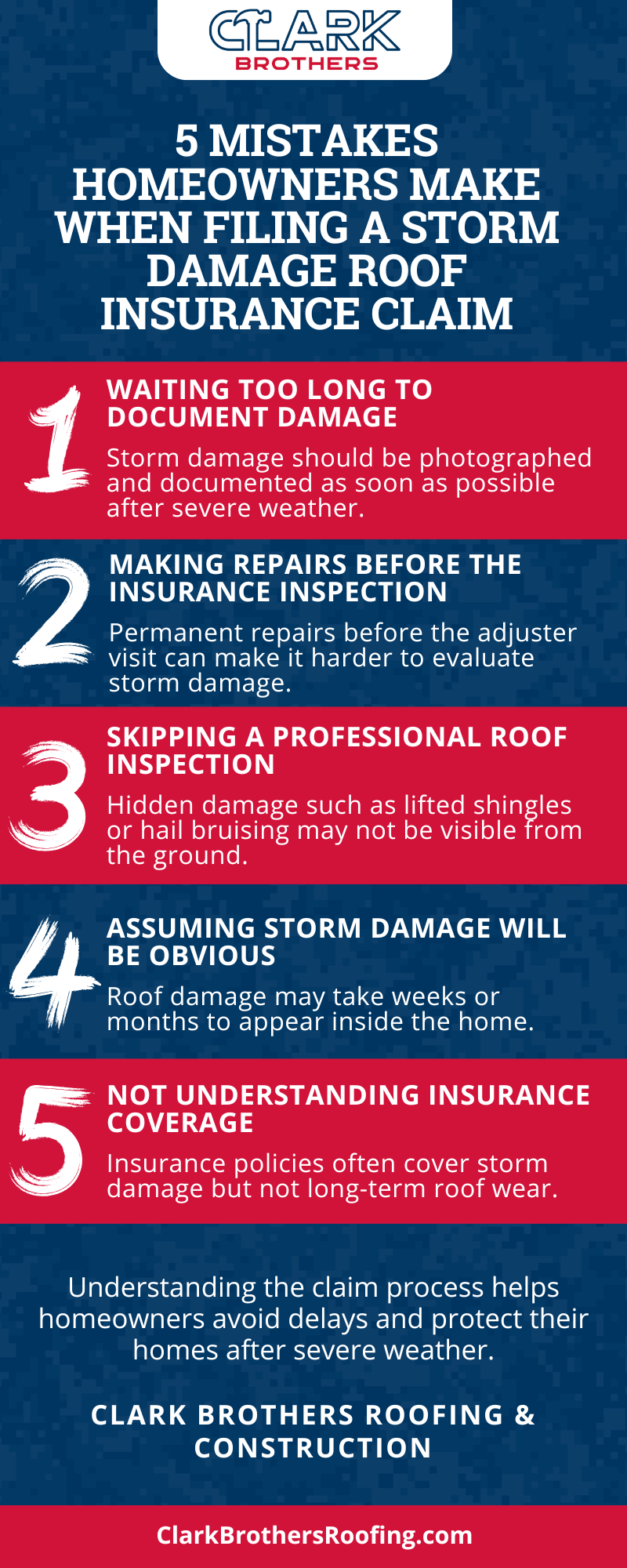
Mistake 4: Assuming Storm Damage Will Be Obvious
Storm damage does not always appear immediately. In some cases, the roof may appear normal at first, but small issues can worsen over time.
For example, hail can weaken the protective granules on asphalt shingles without causing immediate leaks. Wind may lift shingles slightly, allowing water to enter slowly during future storms.
Over time, these smaller issues can lead to problems such as:
- ceiling water stains
• attic moisture buildup
• damaged insulation
• interior drywall damage
Because of this delayed impact, homeowners sometimes discover storm damage weeks or even months after the original storm occurred.
Mistake 5: Not Understanding What the Insurance Policy Covers
Another common mistake homeowners make is assuming that all roof damage will automatically be covered by insurance.
Most homeowners insurance policies cover sudden storm-related damage, such as wind or hail. However, insurance typically does not cover damage caused by long-term wear, poor maintenance, or aging roofing materials.
Understanding the difference between storm damage and general roof deterioration can help homeowners set realistic expectations during the claim process. Reviewing your policy details or speaking with your insurance provider can provide clarity before filing a claim.
What the Roof Insurance Claim Process Usually Looks Like
While every insurance provider may have slightly different procedures, most storm damage roof insurance claims follow a similar process. Understanding these steps can help homeowners avoid common storm damage roof insurance claim mistakes during the filing process.
- The homeowner documents signs of storm damage.
- A professional roof inspection is scheduled.
- The homeowner contacts their insurance provider to report the claim.
- An insurance adjuster evaluates the damage.
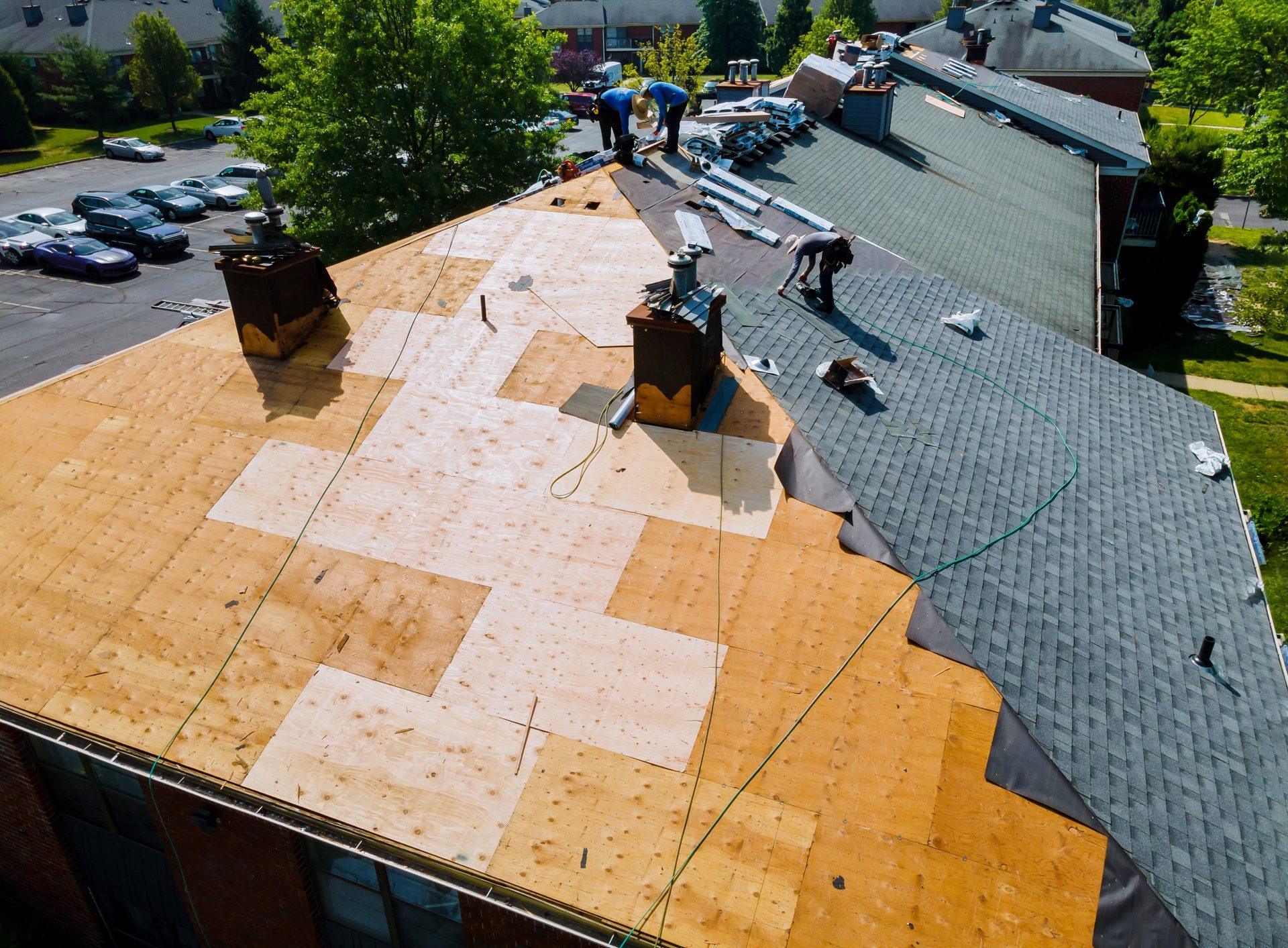
- Repair or replacement plans are developed if the claim is approved.
Understanding this process ahead of time can help homeowners feel more prepared and avoid unnecessary complications.
How Clark Brothers Helps Homeowners During Storm Damage Claims
After severe weather, many homeowners are unsure whether their roof has been affected or whether a claim may be necessary.
Clark Brothers Roofing & Construction helps homeowners throughout North Georgia by providing professional roof inspections that identify storm-related damage and document roofing conditions. This inspection process helps homeowners better understand the condition of their roof and determine the next steps if storm damage is present.
In situations where insurance claims are involved, proper documentation and clear communication can help ensure the repair process moves forward smoothly.
Protecting Your Roof After Storm Damage
Storm damage roof insurance claims can feel complicated, especially when homeowners are dealing with unexpected damage and urgent repairs. Understanding the most common storm damage roof insurance claim mistakes can help homeowners avoid delays and move through the claim process with greater confidence.
If you believe your roof may have been affected by recent storms, a professional inspection can help identify potential damage and determine the next steps for protecting your home.
For additional information about identifying storm damage and understanding the repair process, homeowners can also explore the Clark Brothers Storm Damage Roof Repair Guide, which provides a deeper look at what to watch for after severe weather.