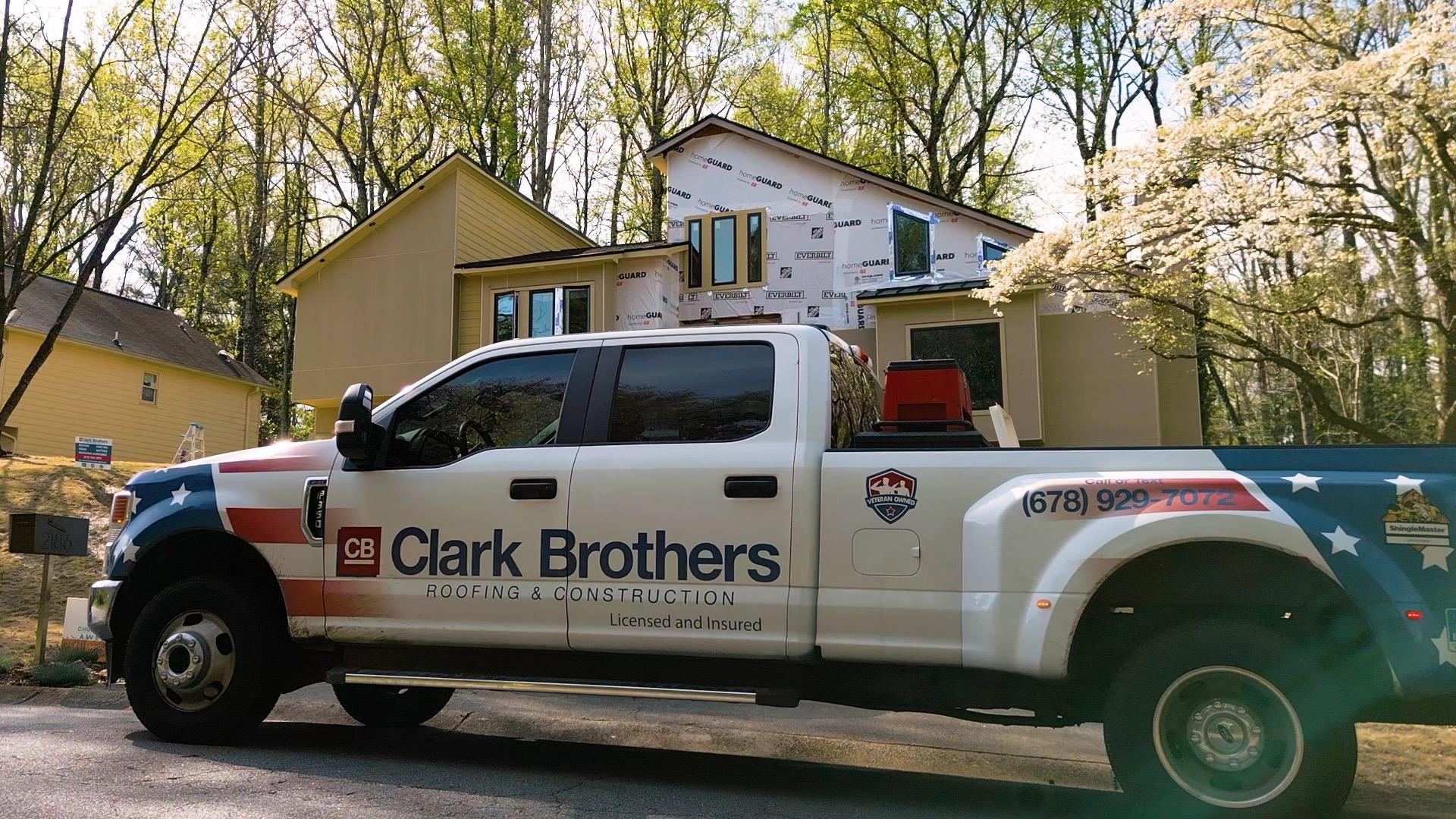

Clark Brothers Roofing & Construction offers attic ventilation installation in Roswell, GA. We provide clear communication throughout your project, and personalized customer service to address your roofing needs.
What sets our vent installers apart?
- Veteran and Family-Owned: Trusted by local families for reliable service.
- Complimentary Roof Inspections: Identify issues early at no cost.
- Clear Communication: Stay informed every step of the way.
- Transparent Pricing: No hidden fees, ever.
Talk to attic vent contractors near you. Call (678) 928-8302!
Local Roof Vent Installers
We offer professional roof vent installation services in Roswell, GA, to improve airflow and prevent heat and moisture buildup in your attic.
Our Roof Vent Installation Services Include:
- Installing soffit vents, ridge vents, and other ventilation systems.
- Ensuring proper airflow to regulate attic temperature.
- Preventing issues like roof damage, mold growth, and higher energy costs.
We provide personalized service, use quality materials, and ensure every installation meets your home’s needs. Our goal is to improve your home’s comfort and protect its structure.
For premium roof vent installation, call (678) 928-8302.
Ridge Vents and Attic Ventilation for Your Home in Roswell Georgia
Proper attic ventilation helps maintain a comfortable and energy-efficient home. Ridge vents, combined with a well-designed ventilation system, help regulate airflow, reduce moisture buildup, and prevent heat from accumulating in your attic.
We install ridge vents tailored to your home’s structure, ensuring effective ventilation that protects your roof and enhances energy efficiency. Our vent installers in Roswell, Georgia, provide solutions to improve air circulation, extend the life of your roof, and keep your home comfortable year-round.
Call (678) 928-8302 for attic vent installation in Roswell, Georgia.
Importance of Roof Ventilation
A properly ventilated attic reduces heat buildup and moisture accumulation, protecting your roof and improving energy efficiency. Balanced ventilation systems can lower energy bills and extend the lifespan of your homes roof, saving you money over time.
If your attic is unbearably hot in summer or your basement is uncomfortably cold in winter, poor roof ventilation could be the issue. Many homes, including high-end properties, lack adequate ventilation systems, leading to energy inefficiencies and potential damage.
Consider the other benefits of a properly ventilated roof:
- Energy costs are reduced because air conditioners do not have to work overtime to cool your home in the summer.
- Indoor temperature extremes are reduced because the home’s temperature is better regulated.
- Moisture is regulated, preventing mold and rot that could affect the framing of your home.
How Roof Ventilation Protects Your Property
- Summer Protection: Proper ventilation cools your roof by allowing airflow that regulates temperature. It reduces heat buildup, prevents shingle wear, and protects materials from expansion, preserving the roof’s durability.
- Winter Efficiency: Ventilation circulates cool air in winter to prevent snow from melting and refreezing. Ice buildup can cause leaks, block gutters, and damage your roof and interior.
- Extended Lifespan: By reducing trapped heat and ice formation, ventilation protects internal structures and extends the life of your roof.
Investing in effective roof ventilation keeps your home energy-efficient, protects it from damage, and maintains its value throughout the year.
Call to get ventilation solutions tailored to your property.
Roof Ventilation Systems for a Comfortable Home
A well-ventilated roof preserves the integrity of your home and maintains a comfortable indoor environment. There are several types of ventilation systems to consider, each designed to promote airflow and protect your roof.
Soffit Vents
Soffit vents are often made of cardboard or plastic. They feature air passageways that attach to the underside of the roof decking. These vents prevent insulation from blocking airflow, ensuring continuous ventilation throughout your attic. Soffit ventilation is relatively inexpensive and easy to install, effectively reducing moisture in the attic.
One disadvantage of soffit ventilation is that achieving the proper balance of intake and exhaust can be challenging. The system may not work correctly if there are not enough vents on the roof or if the vents are too small. Also, soffit vents can be blocked by insulation or other debris, reducing their effectiveness.
Ridge Vents
Ridge vents are a cost-effective option for roof ventilation. They are installed along the peak of a sloped roof and covered with shingles to match your home’s exterior. Ridge vents help improve air circulation, working seamlessly with other ventilation methods to maintain proper airflow.
However, ridge ventilation isn’t suitable for all roof types. If there’s any discontinuity in the ridgeline, like dormers or similar structures, it won’t be effective and can even cause damage to your home. You will need a continuous ridge line without interruptions to benefit from this system.
Gable Ventilation
Gable ventilation involves installing vents on the gable ends of the roof. This system draws in cool air from one end of the attic and pushes hot air out the other. Gable ventilation is easy to install and can effectively solve smaller attic spaces.
However, gable ventilation may not be ideal for larger attics as it might not provide enough air circulation. They can also ruin a building’s aesthetic appeal with their unattractive design.
Turbine Ventilation
Turbine ventilation involves installing a turbine on the roof that spins as the wind blows. This system draws hot air out of the attic and can be an effective solution for buildings in windy areas. Turbine ventilation is also relatively inexpensive and easy to install.
A downside to turbine ventilation is the sound it can produce when strong winds are present. Furthermore, a buildup of dirt or ice on turbines may impede their productivity and efficiency.
Power Ventilation
Power ventilation involves installing an electric fan that draws hot air from the attic. This system can be effective for larger attics and is controlled with a thermostat or humidistat. It is also relatively quiet and does not rely on wind or other natural forces.
Power ventilation relies on electricity. It is unsuitable for buildings in regions with intense winds or inconsistent weather conditions.
Call our vent installers if you need an upgrade.
Get Professional Help
We offer personalized attic ventilation solutions in Roswell, Georgia.
Call (678) 928-8302 to schedule a free inspection and ensure your home’s ventilation system is in good condition.
Comprehensive Roofing Ventilation Services for Your Home
We provide professional solutions to improve attic ventilation and ensure your home stays comfortable and efficient.
We offer a full range of roofing ventilation services, including:
- Attic Vent Installation: Add soffit or ridge vents to improve air circulation.
- Ventilation Upgrades: Modernize your existing system to ensure optimal airflow.
Our experienced team delivers reliable service and uses quality materials for every project. We focus on solutions that meet your needs while enhancing the performance of your home.
Call (678) 928-8302 for roof vent installation in Roswell, Georgia.
Clark Brothers Roofing & Construction
1050 Fraser St, Roswell, GA 30075
(678) 928-8302
Operational Hours:
Monday to Sunday: 7 AM–9 PM
FAQs
What are roof vents, and why are they important for my home?
Roof vents are openings that allow air to circulate through your attic. They are essential because they reduce heat and moisture buildup, preventing roof damage and improving your home’s energy efficiency.
Should I choose metal roof vents for my attic vent installation?
Choosing metal roof vents for your attic installation is a good option as they are durable, resistant to weather damage, and provide adequate airflow to ventilate your attic.
How does attic vent installation impact energy efficiency?
Attic vent installation improves energy efficiency by regulating attic temperature, reducing the strain on your HVAC system, and lowering energy costs.