If you’ve lived through a Georgia summer, you know the skies can go from sunny to stormy in an instant. High winds, sudden downpours, hail the size of golf balls, it’s all part of life here. And while the weather may pass quickly, the damage it leaves behind on your roof doesn’t disappear on its own.
Storm damage repairs are among the most urgent home maintenance needs following severe weather. Acting fast not only protects your roof, but it also protects your entire home and your wallet from unnecessary costs down the road.
What Storm Damage Looks Like And Why You Might Not See It
Roof damage isn’t always visible from the ground. High winds can lift or crease shingles, hail can bruise materials in a way that weakens them over time, and falling debris may puncture the surface without fully tearing it. The result? A compromised roof that lets moisture in slowly, so slowly that you may not notice until mold stains appear on your ceiling.
The real danger lies in what you can’t see. Water can seep into insulation, rot structural wood, and create the ideal environment for mold spores. And the longer that damage goes unaddressed, the more complex (and costly) the repairs become. What could have been a quick patch job often turns into replacing decking, insulation, drywall, and paint.
Storm Damage Repairs: Why Time Is Money
Homeowners often underestimate how quickly damage compounds. The difference between addressing storm damage within the first week versus waiting a month is often the difference between a few hundred dollars and a few thousand.
Prompt repairs protect your roof’s structural integrity and help prevent interior water damage. More importantly, insurance companies expect timely reporting. If you delay too long, your claim could be reduced—or outright denied—because the damage worsens due to inaction.
In short, speed matters. Not just for protecting your home but also for maximizing your insurance coverage and minimizing your out-of-pocket expenses.
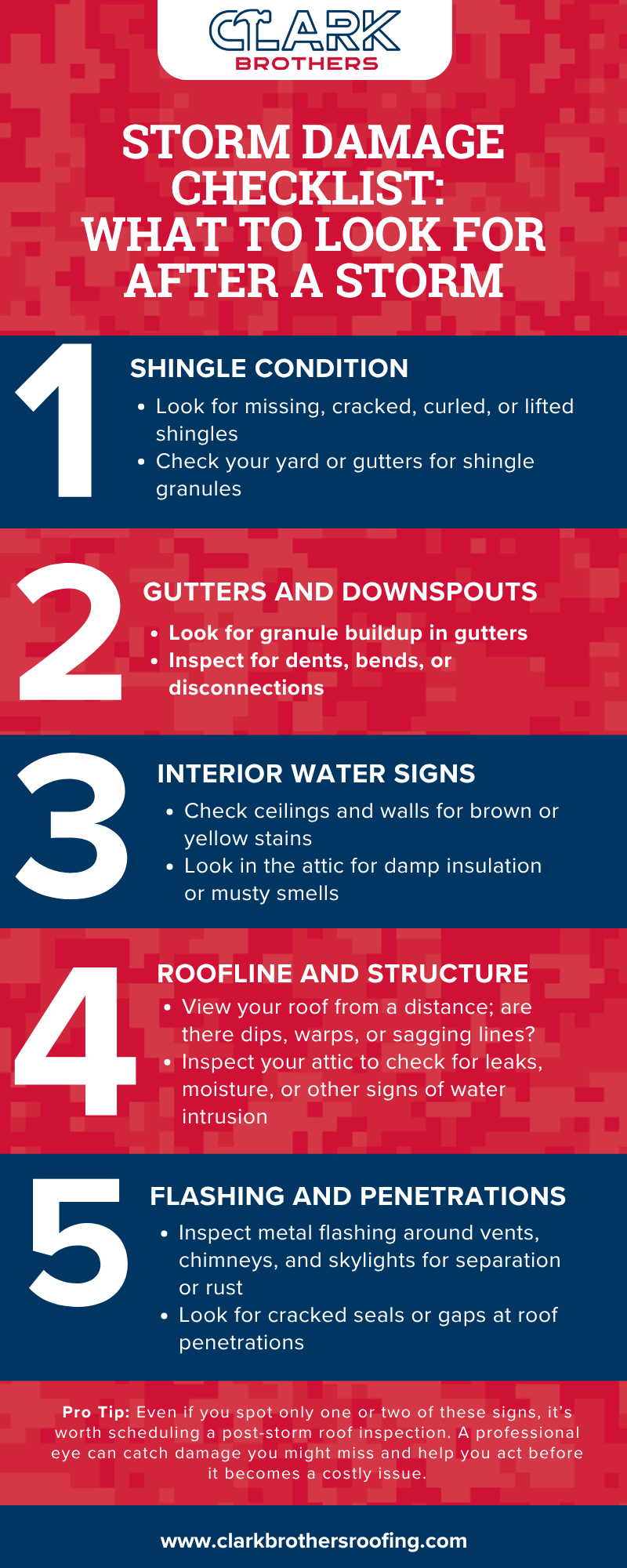
Storm Damage Checklist: What to Look For After a Storm
You don’t need to climb on your roof to get a sense of whether storm damage repairs might be necessary. Start with this homeowner-friendly checklist to assess potential issues from the ground and inside your home:
1. Shingle Condition
- Look for missing, cracked, curled, or lifted shingles
- Check your yard or gutters for shingle granules
2. Gutters and Downspouts
- Look for granule buildup in gutters
- Inspect for dents, bends, or disconnections
3. Interior Water Signs
- Check ceilings and walls for brown or yellow stains
- Look in the attic for damp insulation or musty smells
4. Roofline and Structure
- View your roof from a distance; are there dips, warps, or sagging lines?
- Inspect your attic to check for leaks, moisture, or other signs of water intrusion
5. Flashing and Penetrations
- Inspect metal flashing around vents, chimneys, and skylights for separation or rust
- Look for cracked seals or gaps at roof penetrations
Pro Tip: Even if you spot only one or two of these signs, it’s worth scheduling a post-storm roof inspection. A professional eye can catch damage you might miss and help you act before it becomes a costly issue.
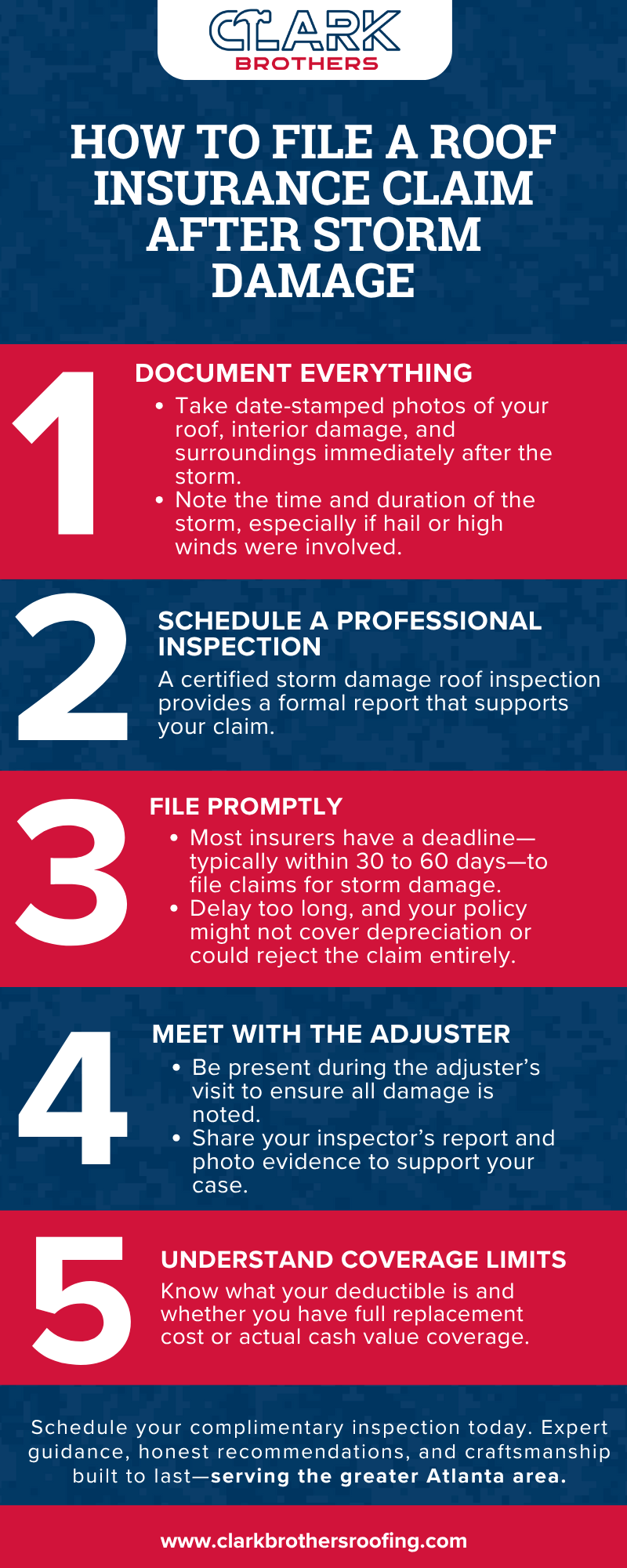
How to File a Roof Insurance Claim After Storm Damage
Filing a roof damage claim can feel overwhelming, especially after a storm when you’re juggling immediate concerns. But taking the right steps early will help protect your investment and increase your chances of full coverage.
Here’s what the insurance process typically looks like:
- Document Everything
- Take date-stamped photos of your roof, interior damage, and surroundings immediately after the storm.
- Note the time and duration of the storm, especially if hail or high winds were involved.
- Schedule a Professional Inspection
- A certified storm damage roof inspection provides a formal report that supports your claim.
- File Promptly
- Most insurers have a deadline—typically within 30 to 60 days—to file claims for storm damage.
- Delay too long, and your policy might not cover depreciation or could reject the claim entirely.
- Meet with the Adjuster
- Be present during the adjuster’s visit to ensure all damage is noted.
- Share your inspector’s report and photo evidence to support your case.
- Understand Coverage Limits
- Know what your deductible is and whether you have full replacement cost or actual cash value coverage.
The sooner you begin this process, the more likely you are to receive full benefits and complete repairs before additional storms cause further damage.
Repair Timelines: Why Speed Doesn’t Mean Sacrificing Quality
There’s a common misconception that speed sacrifices quality. In reality, a well-prepared roofing contractor can mobilize quickly after a storm and still deliver repairs that last. Experienced crews work with proven systems, weather-resistant materials, and coordinated timelines to ensure that even fast-tracked jobs meet long-term standards.
Fast doesn’t mean rushed. It means efficient, experienced, and focused on protecting your home right away.
Not Sure If You Need Repairs? Here’s What to Do Next
Not all storm damage is easy to spot. Even if your roof looks fine, wind or hail can cause issues that aren’t visible from the ground. A quick inspection can catch those early.
If you’ve seen missing shingles or small water stains inside, don’t wait. Minor damage often leads to bigger problems like mold or structural rot. The earlier it’s repaired, the less it costs.
If your roof is leaking, sagging, or showing clear signs of damage, schedule repairs right away. Acting fast protects your home and helps you avoid claim delays or denials.
Even small issues matter. The best way to know for sure is to get a professional inspection and take action before the next storm hits.
Schedule Your Roof Inspection and Be Storm-Ready
When the skies clear, don’t assume your roof weathered the storm just fine. Take a walk, use the checklist, and if anything seems off, even just a little, schedule an inspection. Acting early on storm damage repairs is the best way to protect your investment, your safety, and your peace of mind.
If you’re looking for an experienced local team with a streamlined process and quality craftsmanship, Clark Brothers is ready to help when the time comes.
Schedule your complimentary roof inspection today and get the clarity you need to move forward with confidence.
Click here for our ultimate guide to improving your home’s exterior.