Storms can hit fast in North Georgia, and when they do, your roof is the first line of defense. But what happens when that defense gives out?
Roof tarping is one of the quickest ways to protect your home from further damage. Still, many homeowners aren’t sure when it’s necessary or what it really does.
In this post, we’ll break down how roof tarping works, when it makes sense to use it, and what its limits are. If you’ve recently had storm damage or want to prevent a situation from getting worse, this will help you make the right next move.
What Is Roof Tarping?
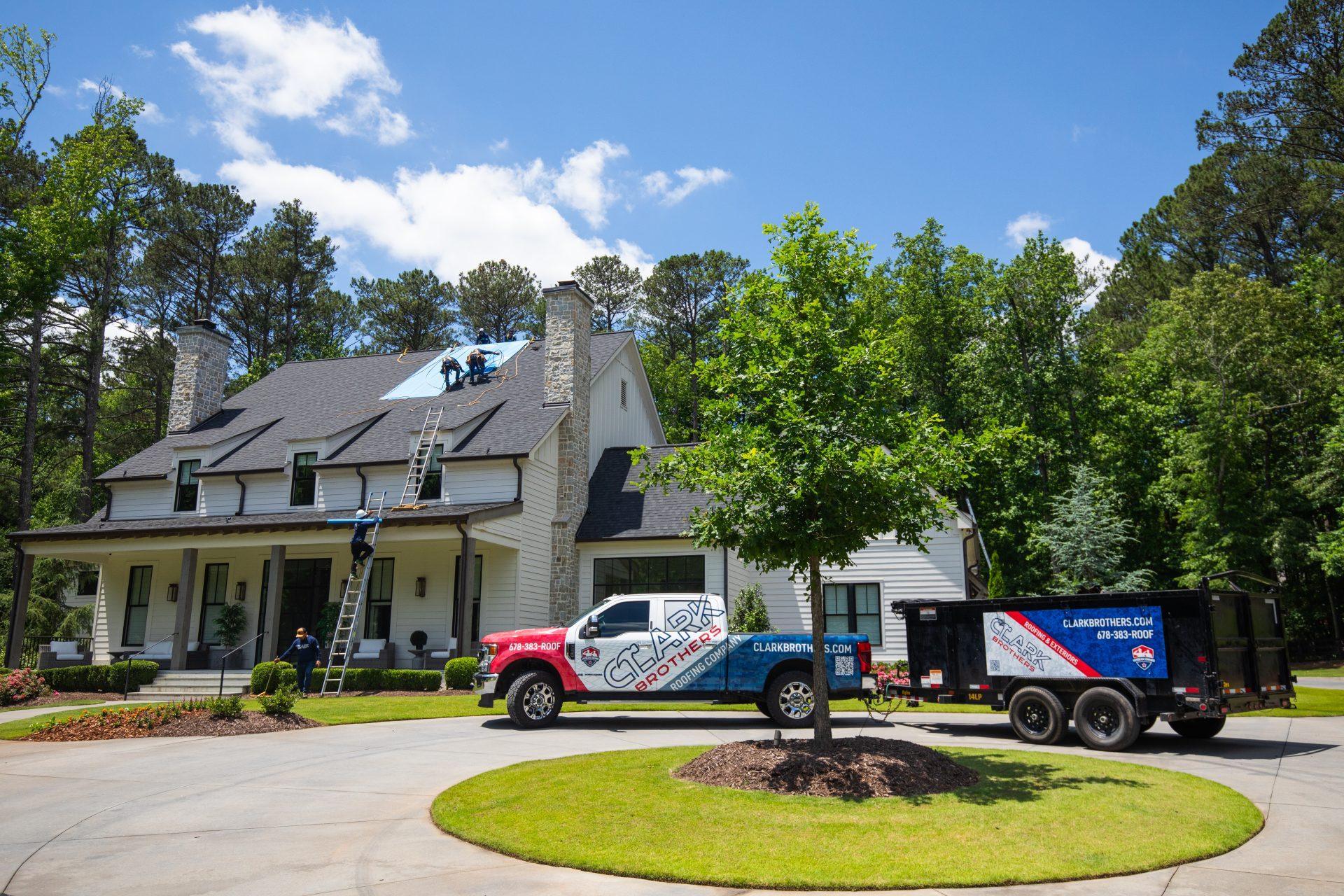
Roof tarping is a temporary solution that covers a damaged section of your roof using a heavy-duty, waterproof tarp. It’s commonly used after storms that cause shingle loss, holes from debris, tree limb damage, or active interior leaks. Once in place, the tarp prevents more water from getting in and protects your home until repairs can begin.
While it might seem simple, tarp installation has to be done properly to be effective. If it isn’t secured well, wind can lift it, or water can pool underneath and make the problem worse. A well-installed tarp buys time, prevents rot or mold, and helps contain the damage while your roofer assesses what needs to be done.
When Roof Tarping Is the Right Call
Tarping makes sense when your roof is exposed, and the weather isn’t done yet. If you can see decking, daylight, or damage that hasn’t been sealed, and another round of rain is coming, it’s time to act.
For example, if a tree limb breaks through your roof, tarping keeps that breach from allowing water into your attic. If shingles blow off and storms are in the forecast, a tarp can protect the underlayment until a repair crew is available. Even a small leak may require a tarp if it’s actively dripping and you’re waiting for an inspection.
The key is to think of tarping as a shield, not a solution. It holds the line until the real fix is in motion.

What Roof Tarping Can’t Do
A tarp won’t fix the root issue. It doesn’t seal flashing, repair broken decking, or correct ventilation problems. Leaving a tarp in place for too long can also create new problems like trapped moisture, mold growth, or sagging material if the weather worsens.
That’s why tarp installation should always be followed by a full inspection. The goal is to prevent more damage, not to delay the repair itself.
If you’re not sure what to do after a storm, you’ll find a clear step-by-step breakdown in this post on what to do after storm damage. It walks you through how to stay safe, protect your belongings, and get help fast.
Does Insurance Cover Roof Tarping?
Most insurance policies expect you to take steps to prevent additional damage after a storm. Tarping usually qualifies as a reasonable mitigation measure. It shows that you acted quickly to protect your home, which can strengthen your claim.
For that reason, it’s important to work with a licensed roofing contractor who knows how to document the damage properly. Photos, inspection notes, and professional installation all help with claim approval. In some cases, DIY tarping can cause delays or denials if the insurer doesn’t consider it up to standard.
Should You Tarp the Roof Yourself?
In most cases, no. Even if you’re handy, climbing on a storm-damaged roof is risky. Wet surfaces, loose shingles, and hidden structural issues make it dangerous. There’s also a risk of doing more harm than good—especially if the tarp isn’t sealed correctly or water ends up trapped underneath.
Hiring a professional ensures the tarp is installed the right way and your home is safe in the meantime. It also gives you early insight into whether you’re dealing with a minor repair or a more serious issue.
Tarping Is a Temporary Fix. What Comes Next Matters.
Roof tarping plays a valuable role in storm recovery. It protects your home from further damage and helps buy time when the weather won’t wait. But it’s only one step in the process.
Once the tarp is in place, your next move should be a thorough roof inspection and a clear repair plan. That’s where long-term protection really begins.
If you want a full overview of what to expect after storm damage, from insurance steps to repairs, read our ultimate guide to storm damage roof repair and insurance claims.
Need Roof Tarping in Metro Atlanta?
Clark Brothers provides fast, professional roof tarping and full storm repair services across Roswell, Buford, Alpharetta, and surrounding areas.
We’re licensed general contractors who know how to assess storm damage the right way. You’ll get clear guidance, expert work, and zero pressure.
📞 Call (678) 929-7072 or schedule your complimentary inspection and let’s protect what matters most.