After a strong storm moves through Metro Atlanta, many homeowners step outside, glance up at their roof, and feel relieved when nothing looks out of place. No missing shingles. No obvious leaks. No branches scattered across the yard. It’s easy to assume everything held up just fine.
But some of the most serious roofing problems don’t show up right away. Hidden roof damage often develops beneath the surface, quietly weakening the system long before visible signs appear. In Georgia’s unpredictable storm patterns, that kind of damage is more common than many homeowners realize.
Storms don’t always leave dramatic evidence behind. Wind, rain, and hail can affect roofing materials in subtle ways that aren’t easy to spot from the ground. Knowing what to look for, why this damage is missed, and what to do next can help homeowners protect their roof without unnecessary stress or guesswork.
What “Hidden Roof Damage” Really Means
Hidden roof damage refers to storm-related issues that aren’t immediately visible after severe weather. Unlike obvious problems like missing shingles or holes, this type of damage affects the roofing system underneath the surface.
That can include loosened fasteners, small fractures in shingles, shifted flashing, or moisture intrusion below the roofing materials. From the outside, the roof may still look intact. Functionally, though, its ability to shed water and protect the home may already be compromised.
Roofs are built in layers, and those layers overlap by design. Sealants can mask small openings. Attic spaces hide early moisture intrusion. Because of that, a roof can continue doing its job for a period of time even when damage has already started. By the time interior signs appear, the issue is often more advanced than homeowners expect.
Why Atlanta Storms Are Especially Hard on Roofs
Roof damage after a storm is especially common in North Georgia because storms here tend to combine several stressors at once.
Strong winds do more than rip shingles off. They can lift shingles just enough to break the seal underneath, creating pathways for water. Hail adds another layer of risk. It rarely strikes evenly, which means isolated weak points can form without being obvious from the ground.
Wind-driven rain compounds the problem by pushing moisture into areas not designed for constant exposure. On top of that, Atlanta often sees multiple storm systems in a short period of time. Roofing materials may not have a chance to dry out fully between events, which increases the likelihood of hidden issues developing over time.
Signs of Roof Damage Homeowners Often Miss
When people think about signs of roof damage, they usually imagine active leaks or shingles on the ground. In reality, some of the most telling warning signs are far more subtle.
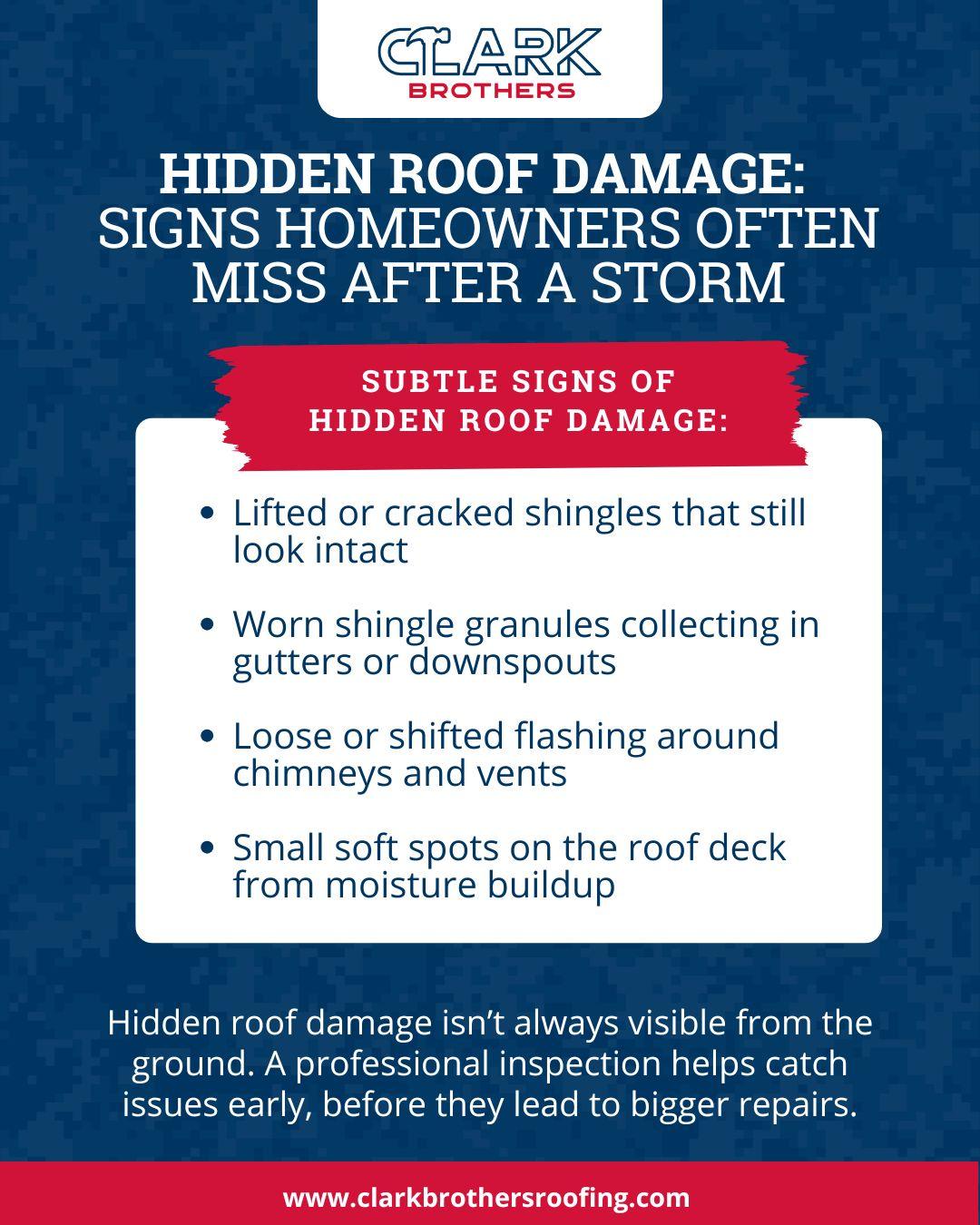
Homeowners often overlook things like slightly lifted shingle edges, small cracks, or areas where protective granules have worn away. Granule buildup in gutters or near downspouts can also signal surface deterioration, even if the roof still looks fine from a distance.
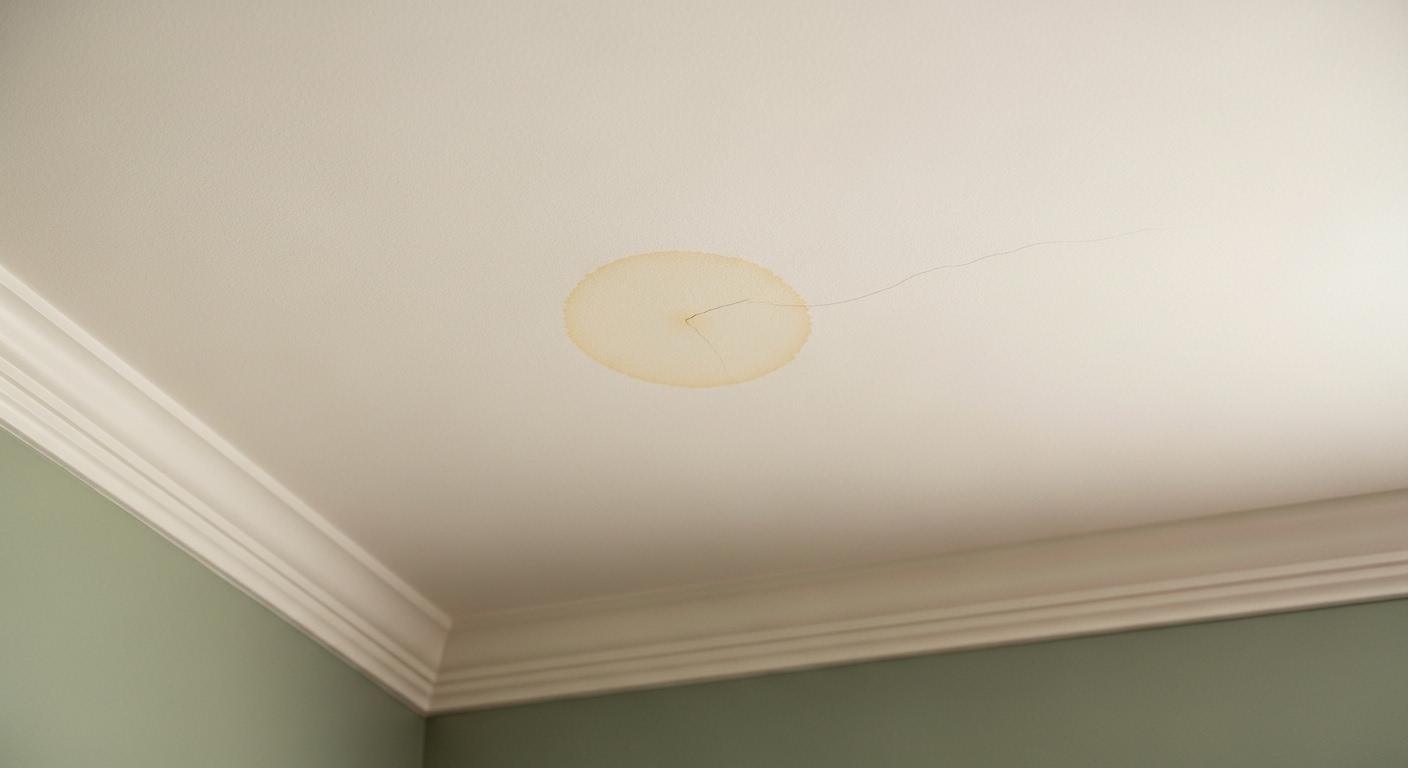
Flashing around chimneys, vents, skylights, and roof transitions is another common trouble spot. If sealants shift or loosen during a storm, water can begin working its way in slowly. Inside the home, early clues might include faint ceiling discoloration, musty attic odors, or insulation that feels damp but not soaked.
These signs don’t always look urgent, which is why they’re easy to dismiss. But they often point to early-stage damage that can worsen if it’s ignored.
Why These Issues Don’t Show Up Right Away
One reason homeowners are surprised by storm-related findings is timing. Damage does not always lead to immediate leaks or obvious problems. Moisture can enter slowly and spread gradually through insulation or decking before it becomes noticeable inside the home.
This is where a storm damage roof inspection becomes especially important. Seasonal changes can accelerate problems that started weeks earlier. Summer heat can cause materials to expand and contract, widening small openings. Later rain events may expose vulnerabilities created during earlier storms.
Because of this delay, it’s common for homeowners to feel reassured right after a storm, only to discover problems much later. By that point, connecting the issue to the original weather event is easy to overlook.
What a Proper Post-Storm Roof Inspection Should Include
A thorough inspection is the most reliable way to identify hidden roof damage before it turns into a larger problem. While homeowners can safely check for obvious exterior concerns, ground-level observations rarely tell the full story.
A professional inspection looks closely at shingles, flashing, vents, skylights, and roof transitions. It also evaluates how water moves across the roof and whether storm conditions may have altered drainage patterns. Inside the attic, inspectors check for early signs of moisture intrusion, ventilation concerns, or insulation issues.
The goal of a roof inspection after a storm is clarity, not alarm. It’s about understanding the roof’s condition and identifying potential vulnerabilities while solutions are still manageable.
What Happens If Hidden Roof Damage Is Left Unaddressed
When hidden damage goes unnoticed, small issues can grow quietly over time. Minor breaches in the roofing system may allow slow moisture intrusion that affects insulation, drywall, and framing.
Catching problems early often means repairs are more targeted and less disruptive. It also helps homeowners avoid interior damage that seems to appear without warning. Addressing concerns sooner rather than later is usually the simplest path forward.
What Atlanta Homeowners Should Do After a Storm
After a significant storm, homeowners don’t need to panic, but staying proactive makes a difference. Pay attention to visible changes around the home, including debris, ceiling discoloration, or unusual attic smells. Even small observations can be helpful when evaluating roof conditions.
If a storm involves high winds, hail, or prolonged rain, scheduling an inspection sooner rather than later is a smart step. Early evaluations establish a baseline and help prevent delayed surprises tied to hidden roof damage.
How Clark Brothers Helps Identify Hidden Roof Damage
Clark Brothers approaches inspections with a full exterior mindset. Rather than focusing on a single visible issue, the team evaluates how roofing, flashing, ventilation, gutters, and surrounding components work together to protect the home.
Inspections are educational and transparent, with documented findings and clear explanations. Homeowners are given straightforward information about what’s happening with their roof and why it matters, without pressure or rushed decisions.
Don’t Wait for Visible Damage
Hidden roof damage rarely announces itself with dramatic warning signs. More often, it develops quietly after storms, beneath materials that still appear intact. By understanding what to watch for and prioritizing timely inspections, Atlanta homeowners can protect their roofs and avoid unnecessary repairs.
Storms are part of life in Georgia. Uncertainty does not have to be. A proactive inspection provides peace of mind and helps ensure your roof continues doing its job long after the skies clear.
Learn more about storm damage roof repair and insurance claims in our complete homeowner’s guide.