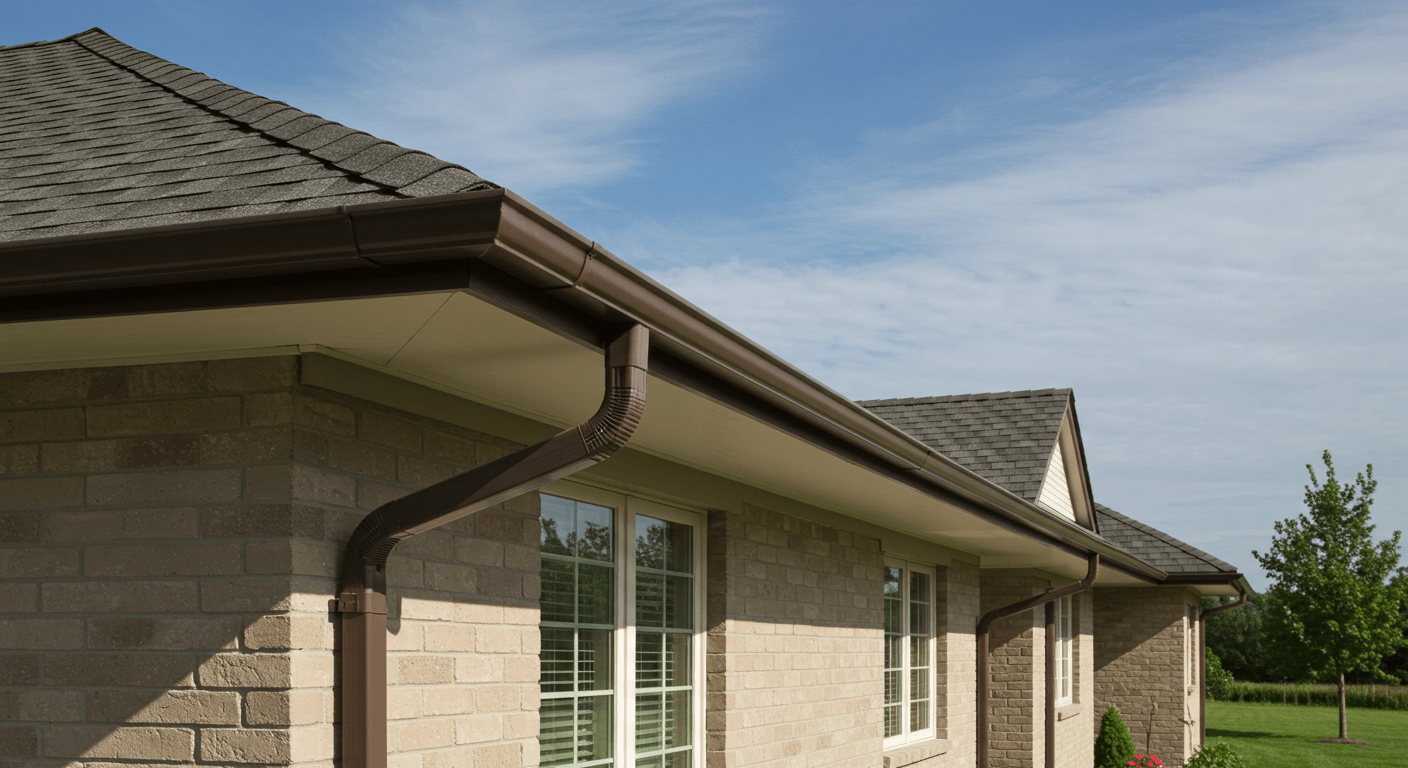
Gutters might not be the first thing you notice on a home, but they play a crucial role in protecting it. By directing rainwater away from your foundation, siding, and roofline, your gutter system helps prevent water damage, mold, and structural issues.
The challenge is that when gutters begin to fail, the signs can be subtle. Acting early can help avoid expensive repairs and protect your investment. Here’s how to tell if your gutter system needs professional attention.
Why Gutters Are More Important Than You Think
Your home relies on a well-functioning gutter system to manage rainwater. When gutters clog, sag, or leak, water finds its way into places it shouldn’t. That water can seep behind siding, collect around the foundation, or damage the roofline. In Georgia’s humid climate, this kind of moisture intrusion can escalate quickly.
A properly working gutter system quietly protects your home from many forms of damage. When something goes wrong, the symptoms may seem minor at first, but can lead to bigger issues over time.
How to Spot the Red Flags
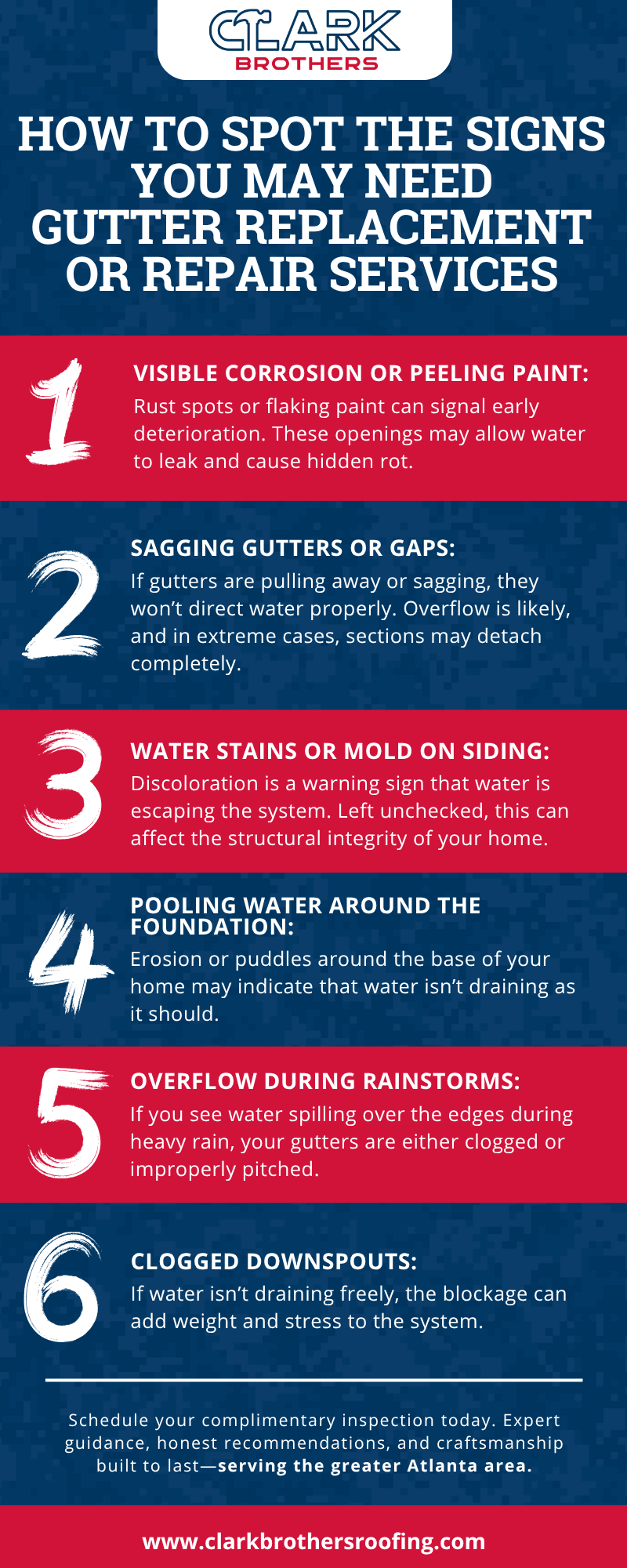
These are some of the most common signs that signal you need gutter replacement or repair:
- Visible Corrosion or Peeling Paint: Rust spots or flaking paint can signal early deterioration. These openings may allow water to leak and cause hidden rot.
- Sagging Gutters or Gaps: If gutters are pulling away or sagging, they won’t direct water properly. Overflow is likely, and in extreme cases, sections may detach completely.
- Water Stains or Mold on Siding: Discoloration is a warning sign that water is escaping the system. Left unchecked, this can affect the structural integrity of your home.
- Pooling Water Around the Foundation: Erosion or puddles around the base of your home may indicate that water isn’t draining as it should.
- Overflow During Rainstorms: If you see water spilling over the edges during heavy rain, your gutters are either clogged or improperly pitched.
- Clogged Downspouts: If water isn’t draining freely, the blockage can add weight and stress to the system.
Materials and Installation Matter
Not all gutter systems are created equal. Vinyl is lightweight and affordable, but more prone to cracking. Aluminum is a popular balance of durability and cost, though it can dent. Copper offers the highest longevity and aesthetics but comes at a premium price.
Even the best materials won’t perform well if they’re installed incorrectly. Proper pitch, secure brackets, and tight seams are all essential. If gutters aren’t angled right, water will pool and increase the risk of damage.
Routine maintenance is just as important as installation. We recommend clearing out gutters in the spring and fall and doing a quick visual check after major storms.
Deciding Between Gutter Replacement or Repair
Not every issue calls for a full replacement. Here are some guidelines:
When Repairs Make Sense
- A section has come loose or needs resealing
- Minor rust or wear is limited to one area
- Most of the system is still intact and functional
When Replacement Is the Better Option
- Multiple sections are damaged or rusting
- Gutters are more than 15 years old and have had frequent issues
- Sagging or pulling away across large areas of the roofline
Understanding the Cost
The cost of gutter replacement or repair depends on several key factors: the material, the size of your home, and how easy it is to access the roofline. Homes with steep pitches or intricate designs can require more labor and time.
Vinyl and aluminum offer lower upfront costs and are popular choices for budget-conscious homeowners. Copper, while more expensive, delivers long-term value through exceptional durability and minimal maintenance.
Ultimately, a well-installed gutter system is a smart investment. It protects some of your home’s most vulnerable areas—your foundation, basement, and siding—from water damage that can be far more expensive to fix.
Keep Gutters Working with Routine Maintenance
A gutter system doesn’t have to look damaged to be at risk. Small issues like loose brackets or minor clogs can quietly lead to bigger problems if they aren’t caught early.
We recommend checking your gutters twice a year — once in the spring and again in the fall. After a heavy storm, it’s also smart to take a quick walk around your home to look for water pooling or signs of overflow.
If you’re not sure what to look for, our team can help. A simple inspection now could prevent expensive repairs down the line.
What to Expect During Gutter Replacement
If you move forward with a full gutter replacement, a bit of preparation makes a big difference. Clear the perimeter of your home by moving any furniture, planters, or decorations. Trim back any branches or shrubs that might block access.
You can expect your installation team to walk you through the entire process ahead of time. At Clark Brothers, we’re committed to communication and care. We’ll explain what’s included in the cleanup, provide a realistic timeline, and make sure you’re comfortable with every step before work begins. Our goal is to make the experience as smooth and stress-free as possible.
One Small System, Big Protection for Your Whole Home
A strong gutter system plays a bigger role in your home’s health than most people realize. From preventing foundation damage to keeping siding and landscaping intact, gutters quietly protect multiple parts of your home every time it rains.
If you’ve noticed any warning signs or want a second opinion, Clark Brothers is here to help. Our team offers free gutter inspections, honest guidance, and skilled craftsmanship from a crew that treats your home like their own.
Reach out today to schedule your inspection and get the trusted support your home deserves.
Click here for our ultimate guide to improving your home’s exterior.